Sometimes, a sensitive dog only needs the slightest external stimulus to instantly silence—or make the whole house quieter—or even more chaotic. You’ve probably experienced that moment: a gust of wind outside the window, a loud bang on the neighbor’s door, and the dog immediately goes into alert mode. Barking becomes a rapid chain reaction, unstoppable.
This scenario is not uncommon, especially with naturally sensitive, highly alert small dogs or dogs that have been frightened in the past. They’re not “bad”; they’re just reacting more strongly to the world. And this is precisely why more and more owners are starting to pay attention to low-stimulation bark collars—a gentler, more gradual, and more emotionally safe behavioral aid.

Contrary to popular belief, low-stimulation devices don’t suppress behavior through “electric shocks.” Instead, they work more like a trainer gently tapping the dog’s attention with their fingertip, helping it step back from over-excitement and return to a calm state. Gentle, yet effective.


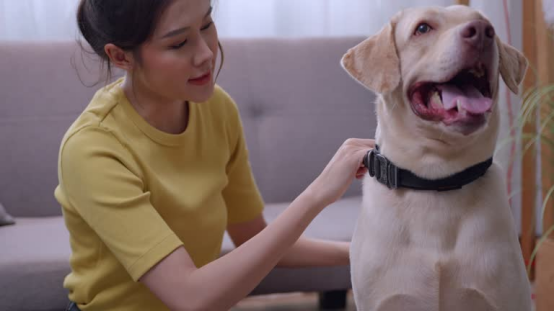
A gentle low-stimulation bark collar on a calm dog

Why do sensitive dogs need “gentle” intervention in their emotional response mechanisms?

When it comes to barking behavior, many trainers first look at the “trigger points.” Sensitive dogs are often not aggressive but rather have a low alert threshold. Slight sounds, unfamiliar scents, or even changes in their owner’s mood can immediately raise their alertness.

A common example is small dogs:
They have naturally sensitive hearing, and their lighter bodies allow for quicker reactions. When stress accumulates excessively, they are more prone to high-frequency barking.

Using highly stimulating methods at this point will only amplify the “fear circuit.” The reason a gentle bark collar has become popular is because it can:

  • Use low-intensity reminders, rather than high-pressure blocking.
  • Break the barking cycle, rather than suppressing emotions.
  • Use a progressive response model to teach dogs self-regulation.
  • Preserve the dog’s healthy responses to the outside world (do not make it “mute”).

Many behavioral experts in the industry even point out:

Overstimulating devices can cause sensitive dogs to form “pain associations,” which in turn triggers more anxious barking.

A low-shock bark collar, however, is fundamentally different; it’s more like a gentle pat on the shoulder. It uses a gentle approach to make the dog realize:
“You’re getting a little too excited right now; let’s stop.”


Trainer adjusting a low-stimulation bark collar on a small dog

How low-stimulation bark collars can help improve behavior without undermining trust.

The biggest fear in training sensitive dogs is that the dog associates training tools with “punishment.”

Therefore, the goal of a low-stimulation bark collar system is never “punishment,” but rather to create a “simple, gentle, and predictable” feedback loop. Trainers often use a “three-step cycle” to explain this principle:

  1. Behavior Occurrence: The dog initiates barking mode, mostly triggered by a minor stimulus.
  2. Low-Stimulus Cue: The bark collar emits a slight vibration, soft sound, or percussion, simply to interrupt the behavior.
  3. Natural Cooling: The dog is alerted, pauses, and its mood returns to a stable range.

This is a completely different training philosophy from the traditional “collar + high shock” approach. Especially in dog training with bark collars that use low stimulation, low stimulation is more suitable for:

  • Emotional stabilization training
  • Small dogs
  • Rescue dogs that were once frightened
  • Dogs that are easily stressed in unfamiliar environments
  • Family dogs that bark frequently but are not aggressive

The most crucial benefit is that it doesn’t diminish a dog’s trust in its owner.

Many owners worry:
“Won’t this device make the dog think we’re ‘punishing’ it?”

Actually, quite the opposite is true. When the stimulus from the bark collar is mild enough, the dog will interpret it as “a reminder from the outside world” rather than punishment from the owner.

This is why many rescue dogs, stressed dogs, and small breeds with low bark thresholds show faster behavioral improvement with gentle stimulation—they are alerted but not harmed.


Industry Trends and Real-World User Experience: Why Gentle Humane Bark Control is Becoming Mainstream

Undeniably, most bark devices on the market a few years ago focused on “strong blocking,” emphasizing speed and immediate “stopping.” However, with the development of behavioral science, mainstream views have clearly shifted towards a more moderate approach. Several trends are crucial:

Trend 1: Emphasizing “emotional safety” rather than “behavioral suppression”

Behavioral experts have long warned that
If a dog is suppressed too quickly, it will accumulate negative emotions and eventually retaliate more violently.

Low-stimulation bark collars do not use “intensity” to change behavior but rather use “rhythm” to guide behavior.

Trend 2: User feedback indicates that gentler approaches are more suitable for long-term improvement.

The most frequent feedback in online community reviews is:

  • “My dog is no longer afraid to go outside.”
  • “Barking has decreased, but the dog has become more relaxed.”
  • “The training process was smoother, with no negative emotions.”

These are based on numerous real-life homeowner testimonials and are not marketing rhetoric.

Trend 3: The number of sensitive dogs is increasing.

With increasing urban noise, densely populated living environments, and the adoption of rescue dogs from shelters, the proportion of sensitive dogs is higher than ever before.
This has led to a stronger market demand for humane bark control tools.


Dog showing signs of improved behavior with gentle collar stimulation.

The core value of a low-stimulation bark collar is not to stop barking but to “guide” it.

This is a point that many people easily overlook.

A truly good bark collar doesn’t mean the dog will “never bark.”
A healthy dog should be able to express itself, give warnings, and bark a couple of times when excited. This is a normal form of communication.

The value of low-stimulation tools lies in teaching dogs:

  • When should the temperature drop?
  • When should we pause?
  • How to return from excitement to calm
  • How to pull attention back from the trigger point

This is actually very close to the concept of “self-regulation” in behavioral science. It’s not about control but about guidance.

The gentle bark collar’s gentle feedback method allows this mechanism to form naturally, without causing the dog to become tense or resistant due to excessive pressure.


Hidden benefits in terms of health and comfort (often overlooked)

Many people talk about low-stimulation products and only see the word “mild,” but their real advantages also include:

1. Lower risk

High-stimulation mode may result in:

  • Heart rate rises sharply
  • muscle twitching
  • Startled barking rebounded.
  • Stress hormones surge

Low-irritation bark collars largely avoid these risks.

2. Especially friendly to small dogs

Small breeds like Yorkies, Pomeranians, and Maltese are naturally timid and particularly sensitive to sudden stimuli. Gentle stimulation avoids “over-frightening” them.

3. Suitable for long-term training rhythm

Gentle stimulation is more suitable for continuous training and will not make dogs more and more sensitive due to accumulated stress.

4. Avoid “negative associations.”

Emotional safety is the most valuable resource in training.
Low-stimulation methods reduce the dog’s association with “I’m being attacked,” thus maintaining its enthusiasm for training.


Let training return to its essence, allowing dogs to grow up in an environment of security.

Choosing a low-stimulation bark collar is essentially choosing a training philosophy:
relying on understanding rather than intensity;
on guidance rather than suppression;
and on peace of mind rather than “stopping.”

If your dog is going through a sensitive period and its emotions are easily swayed by external factors, a gentle stimulation device may be a safer way to help it learn to calm down without getting hurt or being afraid.

The ultimate goal of training is not to quiet the dog but to make it more relaxed and comfortable and to free you from constant barking and pulling.

Learn more about what a bark collar might be useful for, and start your next, more restful night with a gentle reminder.

Leave a Reply

Your email address will not be published. Required fields are marked *