For many older people, owning a dog is not only a joy in life but also a source of emotional support. However, as they age, this sweet companionship can sometimes turn into a “dangerous burden.”

A 70-year-old retiree was walking his beloved Golden Retriever in the park. Everything was perfect until a squirrel suddenly darted across the path. Almost instantly, the 70-pound dog gave chase, and the leash was taut.

For a young person, this might just be a stumble, but for an elderly person with fragile bones and diminished balance, it often means a serious fall, fracture, or even worse consequences.

Many elderly people are caught in a dilemma: either give up owning a large dog or risk injury by continuing to walk it. In fact, technological advancements have provided an elegant solution to this problem.

Modern bark collars are becoming an “invisible leash” for elderly dog owners.

Today, we will explore how to use this tool to easily manage those energetic “little monsters” without resorting to brute force, from the perspective of physical fitness management and safety protection for the elderly.


Older man walking his dog on a rural path. Use a bark collar for effective training.

Why muscle strength is no longer the key factor

Traditional dog-walking logic is based on “physical constraints”: the dog charges forward, and the person pulls it back. This model is extremely dangerous for managing strong dogs for the elderly. Physically speaking, a quadruped with a low center of gravity completely outpaces a bipedal human in terms of explosive power.

The bark collar lies in its transformation of “power struggle” into “signal communication.”

When you own a collar with a remote control, you no longer need to use your arm muscles to fight against your dog’s neck muscles. When your dog shows signs of a sudden burst of energy (such as stiffening its body or staring intently at its target), you simply press a button—usually with a vibration or sound alert.

This signal immediately interrupts the dog’s attention, pulling its mind from “chasing the squirrel” back to “your command.”

This is like installing a “power steering system” on your dog walk. You don’t need superhuman strength; just a flick of your finger can defuse potential dangers with ease.

For seniors with weakened grip or arthritis, this is key to maintaining the ability to walk their dogs independently.


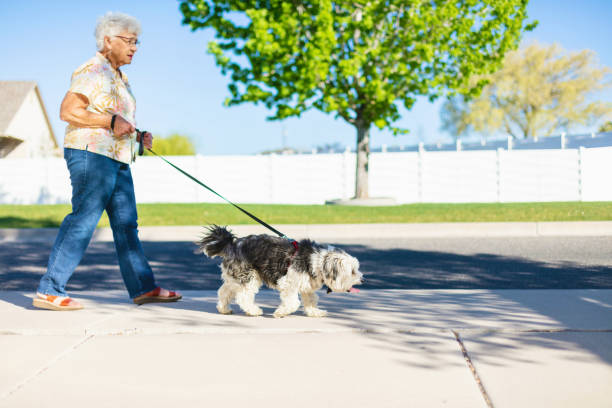
Senior woman walking a small fluffy dog on a sidewalk. Consider a bark collar for training.

Establish a 20-foot safety buffer zone.

The biggest fear for seniors walking their dogs is “sudden loss of control.” By the time you realize the dog is about to run off, it’s often too late. Dog training collars for seniors are designed to help intervene before physical scuffing occurs.

Warning and Interruption Strategy

Most bark collars come with a “non-irritating” communication mode, usually a “beep” or a slight vibration.

When elderly people use it, they can establish the following conditioned reflex:

  1. Observation: Notice the dog’s ears stand up, indicating it’s preparing to charge at another dog or passerby.
  2. Signal: Press the vibration button before the traction rope becomes taut.
  3. Turning around: The dog is confused by the sudden strange touch on its neck and turns to look at its owner.
  4. Reward: Give it a compliment or a treat the moment it turns its head.

By using this “remote tap,” you’re essentially creating an invisible electronic fence between your dog and external temptations.

You don’t need to wait for the leash to pull you down before reacting; you can defuse the danger before it occurs. This is crucial for preventing falls in the elderly.


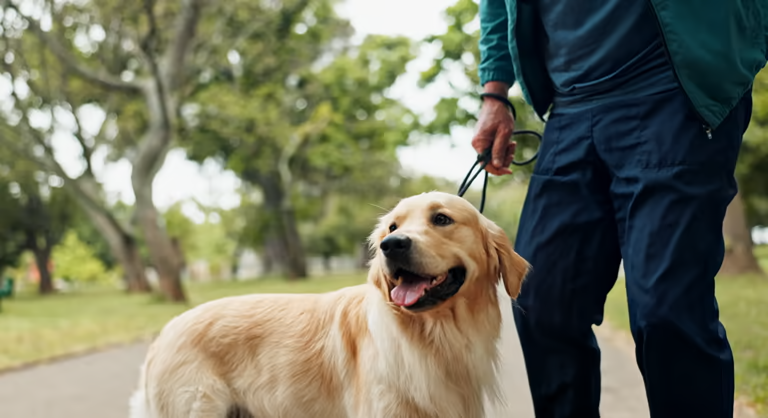
Golden retriever happily walks on leash in park. A bark collar can aid in behavior training.

What kind of equipment qualifies as an easy-use bark collar?

The bar collars on the market come in all shapes and sizes, some with designs so complex they resemble space shuttle control panels, which can be a disaster for elderly people with declining eyesight or dexterity issues. If you are buying one for your parents, or if you are an older user yourself, please pay close attention to the following “age-friendly” features, as these determine whether it is a truly easy-to-use bar collar.

1. Blind Operation Design

In emergency situations (such as when a dog suddenly tries to run into the road), elderly people don’t have time to put on their reading glasses to check the small print on the screen.

The most suitable remote control for seniors should have physical buttons with distinct tactile feedback. Each function (sound, vibration, static electricity) should have its own dedicated button, rather than switching through complex menus. The buttons should be large and raised, ideally with different textures, so that a single touch reveals which function it is.

2. Screen and readability

If the device has a screen, it must be backlit and have a large font. Many modern bark collars, in pursuit of compactness, have extremely small screens, which are very user-unfriendly. Look for models with a clean interface and clearly displayed battery level.

3. Weight and Wearing

Don’t underestimate the weight of a remote control. For seniors suffering from carpal tunnel syndrome or arthritis, a heavy, bulky remote control is unbearable to hold for extended periods. Choose an ergonomic, lightweight design with a lanyard to prevent the remote from slipping and getting lost.


From being “walked by a dog” to “strolling leisurely”

Having the tools, how do we apply them to daily life? We do not recommend that the elderly use electrostatic stimulation from the outset; vibration and sound are often sufficient.

Scene 1: Meeting a friendly neighbor

In the past, when a neighbor came over to say hello, your Labrador might excitedly rush over and pull you around, making you stumble.

New strategy: Press the “sound button” a second before the dog jumps. Hearing the familiar sound, the dog will instinctively put all four paws down to find the source. You can then calmly give the “sit” command. You don’t need to tighten the leash; you can remain elegant.

Scene 2: Endless barking

Some elderly people are very sensitive to high-frequency dog barking, or they worry about disturbing their neighbors and causing disputes.

New strategy: Set the bark collar to automatic anti-bark mode, or intervene manually. When the dog barks at passersby, a slight vibration will alert the user. This not only protects the elderly person’s eardrums but also maintains harmonious neighborly relations.


Maintain independence, enjoy companionship

Growing old doesn’t mean giving up your love for large dogs, nor does it mean living in constant fear of being pulled over. By making good use of the bark collar as a communication tool, senior dog owners can regain control over dog walks.

The key lies in a shift in mindset: you don’t need to be stronger than a dog; you just need to be “smarter.”

Utilize technology, using fingers instead of arm strength and signals instead of pulling. This is not only the best protection for the elderly’s bodies but also gives dogs the greatest freedom—because only an owner who isn’t worried about them falling dares to take them further.


FAQ

Are dog training collars for seniors safe to use if I have shaky hands?

Yes, but choosing the right model is crucial. Users with shaky hands should avoid touchscreen devices. Please choose a remote control with a “Keypad Lock” function. This switch locks the electrostatic discharge function, leaving only the vibration or sound buttons active, preventing accidental electric shocks to your dog due to shaky hands.

Will the bark collar receiver be too heavy for my dog?

It depends on your dog’s size. Modern technology allows bark collars to be made very lightweight. For large breeds like Golden Retrievers and German Shepherds, the weight of the receiver (usually only a few ounces) is negligible compared to their neck muscles. However, for small dogs, be sure to choose the “Mini/Lite” version.

Can this really help with managing strong dogs for the elderly without any training?

The tool itself cannot magically change behavior; it requires simple guidance. Simply wearing it without teaching the dog “vibration = stop” may confuse it. It’s recommended that the senior or their child spend a week establishing a “signal-reward” system at home. Once the dog understands the meaning of the signal, outdoor walks will become much easier.

Leave a Reply

Your email address will not be published. Required fields are marked *