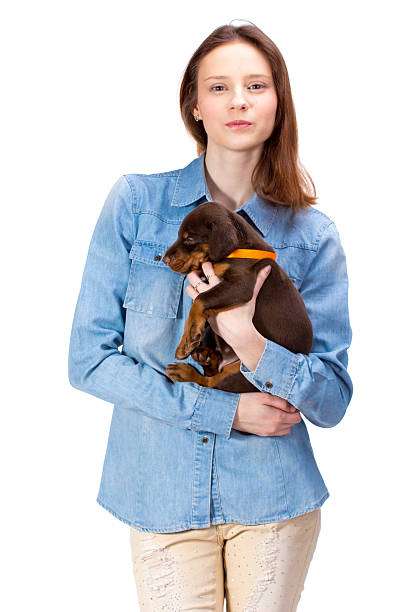
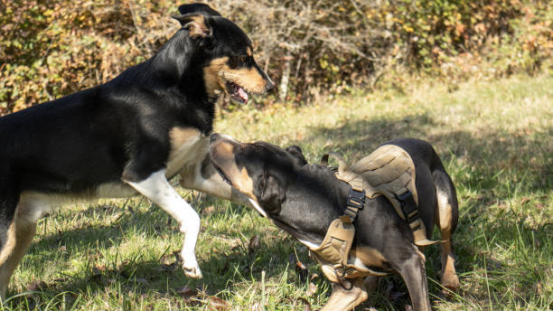
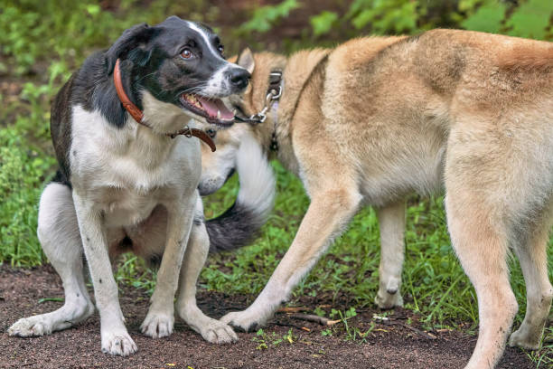
In many public settings, you may have witnessed moments like this: a normally lively puppy, silenced by its owner for excessive barking, suddenly seems to have its emotions frozen in time; the brief silence doesn’t make it more relaxed, but rather makes it appear more tense in an unfamiliar environment. Similar atmospheres are becoming increasingly common in urban life, leading to frequent discussions about whether bark collars alter canine social behavior. Will they turn a naturally friendly dog, eager to interact with the world, into a reserved or withdrawn one?

Once this question is raised, it’s hard to ignore. Especially when training tools have become integrated into a dog’s daily behavior, it’s no longer just about “stopping barking,” but about influencing how the dog expresses itself in social situations, its confidence, and its overall understanding of its environment. Before understanding the function of a bark collar, the more crucial question is: how does it affect a dog’s interactions with other people, dogs, and even the environment as a whole?

Below, let’s re-analyze the real impact of dog socialization with collars from multiple dimensions, including social interaction, emotional response, training logic, and practical usage feedback .


Bark collar helping improve dog’s social interactions

How to get your dog involved in the social system (bark collar)

From a canine ethology perspective, barking is a form of communication—it expresses anxiety, excitement, alertness, wariness, protest, or even simply a desire to participate in interaction. Therefore, when a training tool intervenes and restricts certain barking patterns, it naturally alters the dog’s social rhythm.

Many owners worry that reducing barking might equate to reducing social interaction.
However, the reality is often not so linear.

Industry behavioral consulting cases show that if the bark collar’s stimulation settings are too strong or too frequent, dogs may equate “being stimulated” with “a stranger approaching” or “the appearance of other dogs.” This misunderstanding can lead to a so-called “emotional misattribution,” causing dogs to experience unnecessary stress in social situations. For example:

  • When encountering other dogs, it initially barked out of excitement, but due to collar’s feedback, it mistakenly believed that “seeing dogs = discomfort.”
  • Hearing a child running in the park and calling out, only to be interrupted by a stimulus, it uses the “child’s voice” as a trigger.
  • Initially friendly to strangers, but gradually became silent and even avoided interaction.

On the other hand, some trainers point out that when the bark collar is set properly, it can actually help improve a dog’s socialization. This is because in many cases of socialization failure, the problem isn’t barking itself, but rather that excessive barking prevents the dog from focusing on interaction .

When the level of stimulation is mild enough, and you only remind the dog to stop barking when necessary, it will be easier for it to shift its attention from “providing warnings” to “understanding the situation,” thus exhibiting more mature social behavior—a change that resembles “learning to listen to the environment.”


Dog socializing calmly after bark collar training

The subtle relationship between stimulus intensity and social emotion

The most common viewpoint in research and discussion about bark collar social behavior is that the stimulus itself is not the problem; the issue lies in whether the stimulus is precisely matched with the behavior.

Excessive, rapid, or overly interventionist stimulation from a bark collar can lead to:

  • Suppressed emotions: Although the dog is quiet, it seems unnatural, as if it is enduring some kind of pressure.
  • Passive obedience: not understanding the rules, but simply avoiding discomfort.
  • Social withdrawal: becoming cautious and rigid in responding to new environments.

However, settings that are too low or have no effective reminders at all may cause dogs to bark repeatedly and accumulate negative emotions, which may hinder their socialization.

  • Excitement continues to build
  • Difficulty shifting attention away from stimuli
  • Impulsive behavior in multi-person and multi-dog environments

Experienced trainers typically start by adjusting the lowest effective level of the bark collar. They will observe:

  • Does the dog show a slight pause due to stimulation?
  • Should we continue to maintain a natural posture?
  • Do the eyes, ears, and tail remain gentle rather than tense?
  • Is it possible to re-engage with the interaction after receiving feedback?

This approach allows the bark collar to be used not to “suppress behavior,” but rather to “remind the boundaries of behavior.”

The core of dog training for interaction is to make dogs realize that “it’s not that they can’t communicate, but that they can learn to communicate at the right time and in a more appropriate way.”


What changes might a bark collar bring to real-world social situations?

What most owners are really worried about is whether a bark collar will destroy their dog’s natural friendly traits. This concern is not unfounded, but it is not unavoidable through training strategies.

Three common types of changes can be observed in industry and user feedback:

I. Positive Changes: A More Stable Social Rhythm

Some owners say that once their dogs stopped barking as their primary response, they actually started:

  • Communicate with other dogs using body language (sniffing, inviting bows).
  • More willing to get close to strangers
  • Maintain better eye contact with your owner
  • Maintain focus and calmness in noisy environments

This change typically occurs under conditions of mild stimulation and consistent training.

2. Excessive quietness: Seemingly well-behaved, but actually tense.

Many first-time users mistakenly believe that “quietness equals successful training,” but behavior experts would specifically warn that
if a dog is excessively silent, does not explore, and does not interact in social situations, this is not a positive change.

The manifestations may include:

  • Tail drooping but not completely tucked in
  • Avoid eye contact with other dogs
  • When encountering a stranger, do not back away, but also do not approach.
  • He kept looking back at his owner while walking.

This state is similar to “cautious freeze,” requiring readjustment of collar settings, training methods, or even replacement of training strategies.

III. Stimulus-Association Shift: Mislearning

If the collar’s feedback trigger timing is inaccurate (e.g., due to accidental touches caused by ambient noise), the dog may exhibit the following:

  • Unexplained hostility towards certain dogs
  • Anxiety caused by specific sounds (skateboard sound, car door sound)
  • Avoidance of strangers

This situation often arises because the collar feedback is not accurately correlated with the barking behavior , requiring an immediate reassessment of the usage method.


Positive reinforcement during bark collar training session

How can we make the bark collar a booster, rather than an obstacle, to social skills training?

When done correctly, a bark collar will not only not impair a dog’s social skills, but can also help it integrate into public spaces more calmly. The key lies in the training logic, not in relying on the stimulus itself.

The following methods, derived from the combined experience of industry trainers and users, can significantly improve the balance between pet behavior and collar:

1. Decouple the stimulus from the environment, helping the dog understand that “the rule is the behavior itself.”

When socializing a dog with a collar, the most important principle is that
the stimulus should be related only to the barking, not to the dog itself.

For example:

  • If a dog doesn’t bark when it sees other dogs, it should receive positive reinforcement (treats, head pats, encouragement).
  • If a dog is slightly agitated by a short bark at an unfamiliar sound, it should be guided to observe its surroundings as soon as it calms down.

This method helps the dog understand that
the stimulus is not from encountering a stranger or other dog, but because “the occasion for barking is wrong.”

2. Gradually promote social interaction, rather than immediately immersing yourself in complex environments.

Gradually increasing the density of stimuli— from quiet corridors to small dog parks, to parks with children, to shopping mall plazas— can reduce training stress.

This strategy allows training collar adjustment to better meet the needs of real-world scenarios.

3. Record observation points after each interaction.

Three points to keep during professional training:

  • frequency of barking that day
  • Is the collar responsive?
  • Changes in a dog’s body language during social interactions

This feedback helps owners find the optimal level of stimulation and training rhythm.

4. Occasionally allow your dog to interact in a collarless environment.

This is key to preventing dogs from using collars as a limiting factor.
Allowing dogs to “express themselves freely” in a safe environment helps balance training effectiveness.


The real relationship between bark collars and social behavior: influence exists, but direction is controllable.

In cities where human-pet coexistence is becoming increasingly concentrated, bark collars are no longer just a solution to the problem of barking; they are closely linked to the entire process of how dogs integrate into their social environment.
Their impact can be positive or negative, but it is by no means uncontrollable.

The key is not the collar itself, but rather:

  • The owner’s observational sensitivity
  • Is the stimulation level reasonable?
  • Do you understand canine social logic?
  • Is the training gradual?
  • Can it be used in conjunction with positive guidance?

Conclusion

Bark collars do affect a dog’s social behavior, but this effect is not one-way or uncontrollable. With precise stimulation, gentle training, and careful observation, it can actually help reduce unnecessary barking stress, allowing the dog to appear more at ease in various social situations.

The real key question isn’t just “whether to use a bark collar,” but rather:
what kind of social companion do you want your dog to be?

Are you a curious, boundary-bound, and focused urban dweller?
Or are you feeling tense and anxious in an environment due to a lack of guidance?

The answer always lies in the training methods, not the tools themselves.
If you’d like, we can continue to explore together how to make training easier and more humane, so that your dog can truly feel safe and secure in your world.

Leave a Reply

Your email address will not be published. Required fields are marked *