Few people are willing to admit that the brief pause their dog makes when it first hears the slight stimulation from its training collar sends a shiver down their spine. This isn’t fear but an instinctive protective instinct. You want the equipment to work, but you don’t want overstimulation. Unfortunately, the reality is that most training problems don’t stem from the equipment itself but from improperly set stimulation intensity—too mild is ineffective, and too strong easily leads to resistance.

In this delicate balance, adjusting the intensity of the bark collar’s stimulation almost entirely determines whether training will proceed smoothly. Many first-time users, in particular, believe that using “high intensity” to quickly stop barking is the most effective method, but the opposite is often true. Stability, gradual progression, and observation are more crucial than brute force.

To help more pet owners avoid common pitfalls, this article breaks down methods for adjusting stimulus intensity from multiple perspectives, including behavioral responses, equipment logic, and usage rhythm. It also incorporates industry knowledge such as adjusting bark collar strength, safe dog collar settings, and effective bark collar use to establish a more scientific and safer training approach.


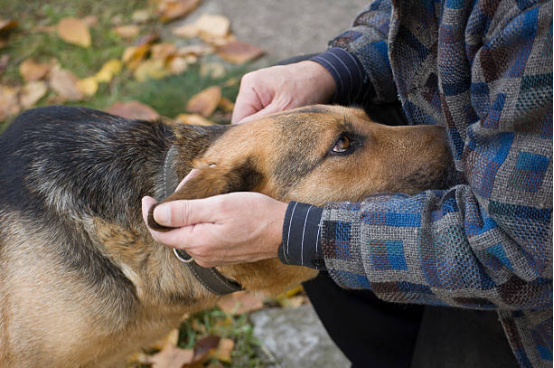
Close-up of a dog with ears slightly twitching, responding to collar stimulus.

What you should pay attention to when your dog starts responding to stimuli.

When a dog first encounters a training collar, its reaction is usually more subtle than you might imagine. There won’t be any violent shaking or dramatic resistance, but rather some slight physical signals—a slight twitching of the ears, a pause as if in thought, a gentle half-step back…
The real training effect often occurs in these almost overlooked details.

Most professional trainers emphasize one principle:
The intensity of the stimulus should not be too great but “just enough to get the dog’s attention.”

If your bark collar is adjusted too lightly, it may not feel it at all, or it may perceive the stimulation as an insignificant tactile sensation and continue barking. Conversely, if you overstimulate it from the start, it may associate the collar with fear, making training more difficult.

To find this “golden zone,” you can judge it by observing the dog’s three immediate reactions:

  1. A sudden focus of attention, such as stopping barking, turning the head, or twitching the ears—this is an appropriate mild response.
  2. A brief moment of confusion: a pause of a few seconds, as if thinking—at this point, the stimulus has taken effect.
  3. Noticeable startle or withdrawal: The stimulus may be too strong and needs to be reduced immediately.

The core of training collars is never punishment but rather making the dog aware that “barking will trigger a slight, uncomfortable, but safe action.” The purpose of adjusting the intensity is to keep this “discomfort” within the gentlest range.


Why is a step-by-step adjustment safer than a one-time adjustment?

When discussing training collar adjustment, there is a rule that has been mentioned countless times in the industry:
Start with the lowest intensity and then gradually increase it.

It may seem simple, but it is the key to avoiding training failure.

Multiple studies on pet behavior indicate that if excessively high settings are applied directly, dogs may temporarily stop barking, but they may also misinterpret the stimulus as an external threat, thus increasing their anxiety. This anxiety, in turn, may lead to more frequent barking, creating a vicious cycle.

Therefore, the advantage of adjusting step by step is

  • It can accurately locate the perception threshold: the smallest stimulus is enough to elicit a slight response from the dog.
  • Reduce emotional stress: Mild stimulation will not cause tension to accumulate, and the training rhythm will be more stable.
  • Avoid creating negative associations: Don’t let the dog feel that wearing a collar is a threat.

More importantly, different breeds, ages, coat thicknesses, and skull structures all affect the effectiveness of stimulus transmission.
For example:

  • Dogs with thick fur need slightly higher intensity.
  • Older dogs have slightly weaker sensory perception;
  • Naturally sensitive varieties require very low levels of stimulation.

This is why even if the same bark collar is used on two dogs of the same age, the optimal setting may still be different. This is why safety adjustments must be personalized rather than using fixed values.


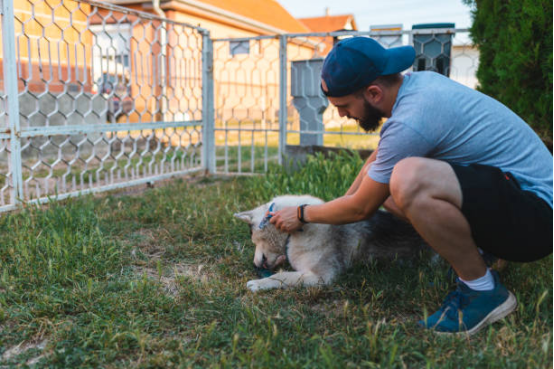
Trainer adjusting a bark collar on a dog during behavioral training.

Using the “reason for barking” as an important basis for stimulus adjustment

Many beginners mistakenly believe that adjusting a bark collar is only related to the intensity of the equipment, but in reality, it is closely related to the dog’s barking motivation. Different reasons for barking result in completely different responses to equipment intensity.

To make the intensity of the stimulus more precise, barking can be broken down into four common types:

1. Alert barking

For example, seeing a stranger or hearing a sound outside the door.
This kind of barking is more emotional, so the intensity should be reduced during training. Let the dog know that the stimulus is there, but don’t suppress it when it is in a high mood.

2. Attention-seeking barking

often occurs when the owner is not around or when the dog wants to interact.
It is milder and requires a gentler stimulus, making the dog realize that the barking is not worth continuing.

3. Separation anxiety-related barking

This type of noise is long-lasting and high-frequency.
The intensity can be slightly higher, but it still needs to be gradually adjusted because emotionally sensitive dogs are prone to aversion to overly strong stimuli.

4. Habitual barking

There’s no reason why; it’s just become a habit.
Usually, mild stimulation can correct it, because this barking is more of a behavioral inertia.

Once you understand the types of barking, you’ll find that adjusting safe dog collar settings isn’t a mechanical adjustment but rather a logical and evidence-based behavioral guide.


The observation period is more important than the intensity of the stimulus.

In many experience-sharing sessions, professional trainers emphasize that “stimulus settings are not fixed values but rather a dynamic adjustment process.”

The key point behind this statement is that a dog’s sensitivity will continuously change on the 1st, 3rd, and 7th days of bark collar training.

For example:

  • A dog will be more sensitive when you first start using the bark collar.
  • As its adaptability increases, its perception of stimuli also changes.
  • Once barking decreases, the intensity of stimulation from the bark collar should be appropriately reduced to maintain the minimum effective value.

This is why we need an “observation period,” typically 3 to 5 days. During this period, the following should be noted:

  • Is the dog continuing to bark because the stimulation from the bark collar is too mild?
  • Is the avoidance behavior caused by slightly higher stimulation from the bark collar?
  • Does it bark more frequently during specific time periods?

Adjusting the bark collar based on this information is the true meaning of effective bark collar use.


Dog calmly sitting after receiving mild stimulation from a bark collar.

The coordination between training rhythm and stimulus intensity

Many users consider the bark collar to be an “automatic correction device,” but they overlook the most crucial aspect: training rhythm.

isThe truly efficient method is:

intensity at aKeep the stimulation intensity low to medium level → match with a consistent correction rhythm → gradually reduce the frequency of stimulation.

The specific steps are as follows:

  • :Maintain a consistent wearing time : help the dog understand that training takes place in a fixed context.
  • :Avoid frequent intensity adjustments : Frequent modifications can disrupt the dog’s cognitive rhythm.
  • Keep a gentle setting after the dog stops barking: training is not a sprint, but a patient build-up.

If you notice a sudden increase in barking one day, don’t rush to increase the stimulation. Sometimes it’s just due to high ambient noise or the dog being stimulated by external factors. The consistency of the training rhythm is often more important than the intensity itself.


The core of adjusting intensity is not “control,” but “guidance.”

Many people who use training collars for the first time tend to focus on the “intensity of stimulation,” but after a while you will find that what really affects the training effect is whether you are willing to observe, understand, and gradually adjust.

A bark collar is essentially a communication tool, not a dominance tool.
Overstimulation will make the dog defensive; understimulation will render training meaningless.
What you need to do is find a stable, gentle, and acceptable balance between these two extremes.

But more importantly, it’s about understanding what your dog is trying to tell you in every pause in barking and every subtle reaction.
Training isn’t about suppression but about creating a quieter, more comfortable lifestyle. Let the collar be an aid, not the master, and both you and your dog will have a much easier time.

Leave a Reply

Your email address will not be published. Required fields are marked *