The truly difficult moment is often not “starting to use it,” but deciding when you can stop using it.

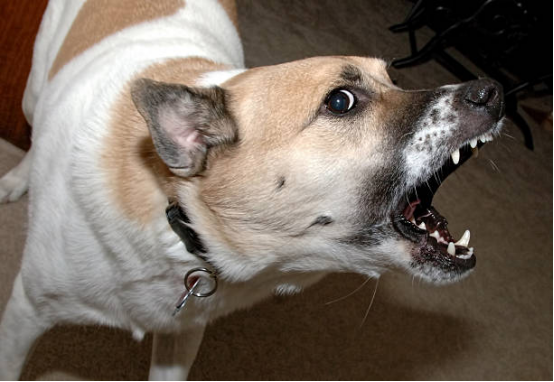
Many dog owners go through this phase: after putting on a bark collar, barking significantly decreases, the environment becomes quieter, and neighbor complaints disappear. But this is followed by a new anxiety—if they stop using it now, will everything revert to its previous state? Has the dog truly learned self-regulation, or is it simply being suppressed by external factors?

This is precisely the question that the behavioral assessment before the bark collar was discontinued aimed to answer. It wasn’t based on intuition or looking at “how long it was quiet,” but rather on a set of judgment logic that was closer to the actual stability of dog behavior.


Quiet does not equal stable; this is the most common misconception.

Let me start with a potentially hurtful point:
“Not barking” itself is hardly evidence that training is complete.

In the context of training evaluation, behavioral stability refers not to the outcome but to the process. That is, how the dog makes choices when a stimulus is presented is more important than whether or not it ultimately makes a sound.

Similar situations have occurred in numerous training cases:

  • It hardly makes any noise when wearing a collar.
  • Once removed, barking will return within 48 hours.
  • Sometimes even more frequently

This isn’t a training failure but rather an overevaluation. The bark collar is working, but the “control” of the behavior remains with the device, not the dog itself.


Dog calmly wearing Bark Collar during gradual reduction phase

The first assessment dimension is the change in response before barking.

What’s really worth observing is what happens before the barking occurs.

As dogs gradually develop self-regulation abilities, they will exhibit subtle but consistent signals. These signals are often overlooked, yet they are more valuable than whether a dog barks or not.

For example:

  • When a stimulus appears, pause before barking immediately.
  • The eyes shifted back and forth between the environment and the owner.
  • A clear “hesitation window” has emerged.

What do these changes indicate?
They indicate that old automatic reflexes are being weakened, and behavior is beginning to become more selective.

If this hesitation persists after the bark collar is discontinued, even if there are occasional barks, it is normal fluctuation and not a failure.


Owner observing dog's hesitation signals before barking

The second assessment dimension is self-recovery ability.

Another key indicator often occurs “after barking.”

In the early stages of development, once a dog starts barking, it is difficult for it to stop on its own and requires external intervention. However, as the behavior matures, many dogs develop a new ability: to stop barking on their own.

Specific manifestations may include:

  • The frequency of barking has decreased significantly.
  • Stop without instructions
  • After stopping, one can quickly return to other behaviors.

This type of change is crucial in the discussion of when to stop bark collars. It reflects not “whether a mistake was made,” but “the speed at which a mistake was corrected.”

In behavioral science, it is often said that stability is not about not making mistakes but about recovering quickly.


Behavioral chart showing pre-bark assessment indicators

The third evaluation dimension is whether the context transfer is valid.

One easily overlooked question is
Is this quietness only possible in a certain scenario?

If the effects of bark collar training only exist at fixed times, locations, and with fixed stimuli, then the training is still in its early stages. True dog behavior stability requires a certain degree of transferability.

For example:

  • Quiet during the day, and can also maintain its quietness at night.
  • Effective at home and remains controllable even after changing environments.
  • The difference in response to familiar stimuli and new stimuli is not significant.

Many users reported that their first attempt to disable the collar failed because the behavior was evaluated only in the “easiest scenario.” This evaluation is often overly optimistic.


Why is “gradual reduction” more reliable than “outright discontinuation”?

In industry practice, almost no experienced trainers recommend abruptly discontinuing the bark collar. The reason is simple:
Behavior needs a transition period, and so does the brain.

The gradual reduction approach is essentially a stress test. By decreasing the intensity of external control, it observes whether the dog can maintain its internal regulation.

Common transition methods include:

  • shorten wearing time
  • Use only during high-risk periods
  • Extend the observation period without equipment

In this process, recording is more important than intuition. Even simply recording changes in reactions over a few days can help determine whether a stable phase has truly been reached.

Learn more analysis data on bark collars.


Discontinuation is not the end, but a new confirmation.

An often overlooked fact is that
Disabling itself is part of the training process.

As the bark collar is gradually phased out, the dog is actually undergoing a new learning process—how to handle impulses without external intervention. Brief relapses are not uncommon during this stage.

The key is not whether there will be a rebound, but whether the rebound is controllable and repairable.

If each fluctuation can return to a stable state in a shorter time, it means that the training has not regressed but rather is being consolidated.


Going back to the original question, what are you evaluating?

Before the bark collar is discontinued, what really needs to be evaluated is not the device itself, but whether control over the dog’s behavior has been transferred.

When the control is in the hands of the equipment, the silence is merely superficial;
When the control is in the dog’s own hands, even if it barks occasionally, it is more reassuring.

Perhaps we can ask this from a different angle:
If there were no collars today, would you already know how to interpret a dog’s next reaction?

When this issue no longer causes anxiety, the time to discontinue its use has often arrived.

Leave a Reply

Your email address will not be published. Required fields are marked *