Late at night, the echoes in the hallway were broken by a sudden bark. The sound of a neighbor’s footsteps, car lights outside the window, or even just a slightly unfamiliar smell in the air can trigger a dog’s reaction. Many owners hesitate at such moments: when training tools are introduced, especially bark collars that directly influence behavior, will they inadvertently weaken the trust between human and dog?

. This question is not new, but it has never had a simple answer. Because the core of the discussion has never been just about “whether the tool is good or not,” but about how dogs interpret their owners’ intentions and how this interpretation, in turn, affects the human-dog bond.


When training tools are used, what signals is the dog “reading”?

From a behavioral perspective, dogs don’t analyze morality or motivation like humans do. They are better at “emotional connection.”
When an intervention occurs, a dog quickly captures information on three levels: bodily sensations, environmental cues, and the owner’s emotional state.

. Many users have mentioned a common detail in forums and behavioral interviews: what truly changes a dog’s reaction is often not the collar itself, but the owner’s current attitude. Tension, frustration, and frequent corrections are interpreted by the dog as unstable social signals. Over time, this inconsistency erodes trust.

Conversely, this is why experts in the field of dog trust training repeatedly emphasize “predictability.”
If the rules are vague and the responses are random, even the gentlest training methods can confuse the dog.
Conversely, if the boundaries are clear and the feedback is consistent, even introducing a bark collar may not disrupt the bark collar relationship.


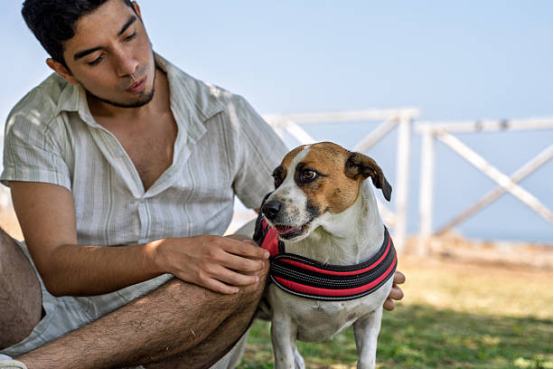
Dog calmly wearing Bark Collar with owner nearby

The problem isn’t with the tools, but with the rhythm of their use.

Many negative impressions of bark collars stem from “excessive, too-fast, and unassessed” usage.

WhenWhenReal-life examples show that
when owners frequently intervene when they are emotionally charged, dogs are prone to avoidance behaviors—lowering their heads, tucking their ears back, and reducing initiating interaction. These are not signs of “obedience,” but rather stress signals.
In such situations, a loss of trust is almost inevitable.

dog. However, another type of user experience presents a completely different picture.
They usually observe and record the triggering conditions for barking before using the dog.
during training, they only intervene in specific, predictable scenarios;
and immediately resume normal interaction, play, or relaxation after the dog quiets down.

In this rhythm, dogs are more likely to see the collar as “part of the environmental rules” rather than an extension of their owner’s emotions.
Boundaries are perceived as stable entities, which actually reduces overall anxiety levels.


Clear boundaries can actually buffer emotional conflict.

In human-dog relationships, an often overlooked fact is that prolonged emotional turmoil damages trust more than short-term behavioral intervention.

Persistent barking often indicates that a dog is in a state of hyperarousal.
The owner’s attempts to stop the barking, such as increasing the volume or approaching and then retreating, are perceived as contradictory social signals by the dog.

Some behavioral studies indicate that when external rules are sufficiently clear, dogs are more likely to detach from their emotions and shift towards behavioral adjustment.
In this case, the bark collar does not serve as a “suppression” tool but rather as a stable and predictable source of cues.

This is why some trainers view the collar as a “neutral boundary tool” rather than a punishment device.
It reduces the frequency of direct owner intervention and lowers the chance of emotional confrontation, thereby indirectly protecting the human-dog bond in some families.


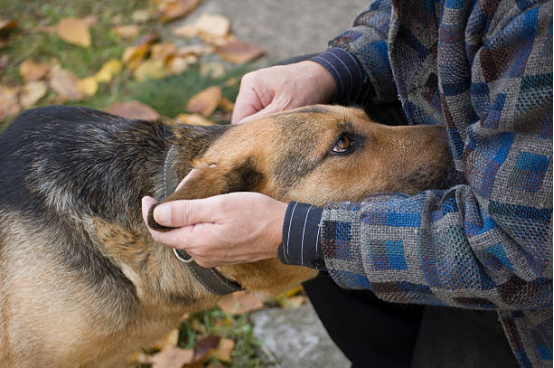
Owner gently interacting with dog after Bark Collar intervention

The key to trust lies in “post-event connection.”

What truly creates the gap is not the moment the intervention occurs, but what happens afterward.

High-quality user experiences often share several common characteristics:

  • After intervention, the owner will proactively resume gentle interaction.
  • Quiet behavior was explicitly reinforced
  • Daily companionship, exercise, and games have not decreased.

These behaviors send a clear signal to the dog:
Rules exist, but the relationship remains safe.

In user interviews, some described the feeling as “an invisible line in the room.”
The line is there, but it doesn’t need constant reminders.
Over time, the dog will proactively avoid the line, rather than becoming wary of its owner.


Illustration of consistent and predictable Bark Collar use

Does a bark collar really undermine trust?

The answer is not absolute.

When used with ambiguous goals, excessive frequency, and a lack of subsequent emotional repair, a bark collar can indeed become the starting point for a breakdown in trust.
However, when rules are clear, emotions are controlled, and the overall relationship is focused on, it can also serve as a “landmark” to help a dog understand the world.

From an industry trend perspective, more and more discussions are shifting from “whether to use it” to “how to use it more transparently and predictably.”
This in itself indicates that people are beginning to re-examine the role of the bark collar relationship in dog trust training.


Boundaries exist, and only then can relationships have space.

Perhaps the real question isn’t,
“Does a Willa bark collar destroy trust?” but rather, “Is trust between humans and dogs inherently precarious when there are no clear boundaries?”

When rules are enforced gently and consistently, dogs no longer need to express their anxiety by barking.
And owners can finally shift their focus from controlling behavior back to the companionship itself.

Trust does not mean the absence of boundaries.
Sometimes, quite the opposite.

Leave a Reply

Your email address will not be published. Required fields are marked *