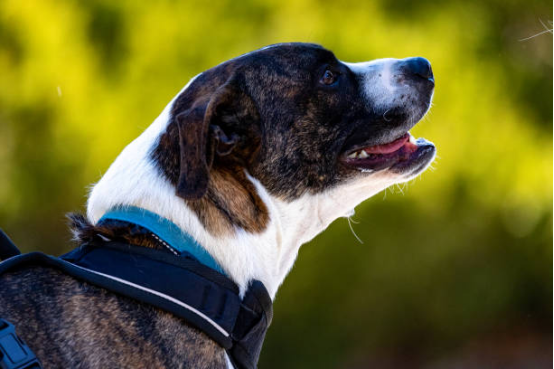
go.”There There is a kind of tranquility that does not come from “complete cessation” but from “gradually letting go.”

instantly or In discussions about dog barking training, many people immediately find themselves in a dilemma: either hoping for a tool to solve the problem instantly or worrying about developing a dependency once used. The bark collar often sits at the intersection of these two sentiments. It’s misunderstood as the end goal, but in more mature training systems, it’s more like a bridge.

permanently but It’s not meant to stay there permanently but to help you overcome obstacles.

Placing the bark collar back in the category of “training transition tool” and re-understanding its role in the complete process of guidance-stabilization-exit is closer to the actual dog training stages and more in line with how behavior transformation actually occurs.


Why do so many training cards fail at the very first step?

bark Many bark training attempts fail not because the method is wrong, but because the rhythm is wrong.

In real-world behavior modification processes, numerous user feedback reports indicate that problems often arise from “trying to accomplish all changes at once.” Barking decreases, but the dog doesn’t know what to do next; tools are still being used, but training has stalled.

. From the perspective of the behavior correction process, this is a typical example of stage confusion.

Barking, especially patterned barking, is essentially a highly skilled behavioral path. It doesn’t disappear through “persuasion,” but rather needs to be interrupted, replaced, and finally diluted.

The bark collar only covered one section of it.


Dog wearing Bark Collar during initial behavior interruption phase

The first phase guides the entry point that disrupts the old path.

. At the starting point of training, the most crucial thing is not “teaching new things,” but rather making old behaviors lose their inertia.

The goal at this stage is simple:
to prevent the behavior from being performed automatically when barking occurs.

Many trainers mention a phenomenon in practice: when a dog is first interrupted while barking, it will pause briefly, turn its head, and observe its surroundings. These few seconds of silence are very important.

This is precisely where the bark collar’s value lies in the bootstrapping phase. It doesn’t require complex instructions; it simply provides consistent interruption signals at critical points in the behavior, thus weakening what would otherwise be a robust chain of reflexes.

It’s important to note that this stage doesn’t aim for “complete silence.” Trying to immediately return to zero can easily lead to a buildup of stress or the emergence of substitute behaviors.


Owner guiding dog through stability and alternative response training

The second phase of stability allowed the new response to stand firm.

Training truly enters the middle stage when barking is no longer a conditioned reflex.

This stage is often overlooked, yet it determines ultimate success or failure. This is because at this time, the dog is in a gray area where “old habits are weakened, and new habits have not yet solidified.”

. At this stage, the role of the bark collar undergoes a subtle change. It is no longer the main focus but rather exists in the background. Its usage frequency decreases, but consistency remains. Meanwhile, the training focus shifts to environmental management, alternative behaviors, and positive reinforcement.

In real-world cases, many successful bark collar transitions occur here:
The dog begins to choose alternative responses when the urge to bark arises, such as diverting attention, returning to the designated location, or waiting for feedback.

suddenly but This change didn’t happen suddenly but rather gradually developed through repetitive, stable, and predictable feedback. The device didn’t “teach” the new behavior, but it made room for it.


Chart illustrating three-phase Bark Collar training process

The sign that the third phase of training is truly complete.

scaffolding.” If the first two stages are about “building the structure,” then the exit stage is about “dismantling the scaffolding.”

Unfortunately, many people never get to this point. They keep using the tools, and the problem seems solved, but they can’t seem to let go of them. This is the root of long-term dependence.

In a mature training system, the discontinuation of the bark collar is not a sudden stop on a certain day but a gradual process:
The triggering conditions are reduced, the wearing time is shortened, and the intensity of intervention is reduced.

When The criteria for judging this stage are also clear:
When the urge to bark arises, can the dog autonomously choose an alternative behavior without the intervention of equipment?

If the answer is yes, then the training is more than halfway complete.

. Further reading provides more analysis on bark collars.


problem; tools are not the problem, expectations are.

technology but Regarding bark collars, the biggest disagreement within the industry is not about the technology but about expectations.

Placing Treating it as a “permanent solution” almost guarantees disappointment;
Placing it as a tool for phased training makes it easier to see real results.

A growing trend in training emphasizes this phased approach: interrupt first, then replace, and finally withdraw. Equipment is just one part of the process, not the answer itself.

The real question to ask is
Without collaborators, can your training system still stand?

When the answer gradually becomes “yes,” that’s when the behavioral transformation truly occurs.

Leave a Reply

Your email address will not be published. Required fields are marked *