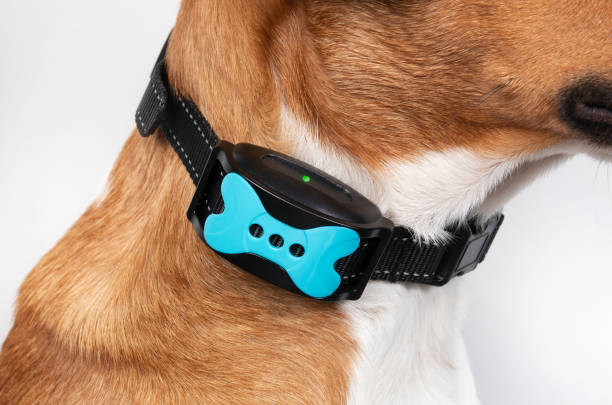
The world is pink during the first week when you bring that fluffy, milk-smelling little guy home. But by the fourth week, when you’re driven to the brink of madness by the sharp, piercing barking of that 4-month-old puppy at 3 a.m., your patience often runs out in an instant.

In the desperation of extreme sleep deprivation, many new homeowners’ fingers will involuntarily slide towards the bark collar in their shopping cart, thinking, “I’m willing to try anything to stop it.”

Hold on. Before you click “Buy,” as someone who has worked in this industry for ten years, I must press the emergency pause button for you. This isn’t just about product instructions; it’s about the lifelong mental health of your beloved dog.

Electronic training collars are sophisticated training tools for adult dogs, not “pacifiers” for puppies.

crossed andToday, we’ll draw a line on the “age limit” that absolutely cannot be crossed, and tell you why using electronic collars too early can ruin a perfect dog.

Cute puppy with black patches wearing an orange collar sits in grass. Consider a humane bark collar.

6 months: An absolute red line based on biology

If you’re looking for the standard answer for the minimum age for shock collars, responsible trainers and veterinarians in the industry will tell you the same number: 6 months.

This is not an arbitrary number; it is based on a dual consideration of canine physiological development and psychological maturity.

Before six months of age, a puppy’s brain is not fully developed. They are in a stage of being full of curiosity about the world but also extremely confused. During this period, their understanding of “cause and effect” is very limited.

When you put a collar on a 4-month-old puppy, it barks and then feels a vibration or static electricity.

shock;An adult dog would think, “Oh, I barked, so I got a shock, I shouldn’t have barked.” But a puppy’s logic is likely broken; it will only feel, “Oh no, my neck suddenly hurts! I’m so scared!”

and anxiousThis incomprehensible pain or fright won’t teach it to be quiet; it will only make it withdrawn, anxious, and even develop “learned helplessness.”

Golden retriever puppy wears a blue patterned collar while resting. Learn about gentle bark collar options.

Why is your puppy barking? Distinguishing between “needs” and “behavioral problems.”

ask,Many owners rush to ask “Can I put a bark collar on a puppy?” because they misjudge the nature of the barking.

issue”For puppies under 6 months old, 90% of barking is not a “behavioral issue,” but rather a “physical need” or “developmental characteristic.”

  • Teething pain: Puppies go through a teething period between 4 and 6 months old. Swollen and painful gums can make them irritable, causing them to whine and bark to express their discomfort. Using a bark collar as punishment at this time is as cruel as punishing a baby for crying because of teething.

  • neck or

    Fear Periods: Puppies go through several “fear imprinting periods.” During this stage, any intense negative experience (such as a sudden electric shock) can cause permanent trauma. A dog that is frightened by an electronic collar during a fear period may develop a lifelong fear of anything worn around its neck, or even a fear of going outside.

  • The beginnings of separation anxiety: When puppies leave their mother and companions to arrive at a new home, their barking is often an instinctive call for their friends. What they need is security, not cold punishment.

Three adorable puppies sleeping peacefully. Early training prevents the need for a bark collar later.

Alternative: How to save your sleep without using a collar?

Since we can’t use a bark collar, what should we do about a 4-month-old puppy barking? We can’t just sit idly by; we must adopt a “management” rather than a “correction” strategy.

Environmental Management (The Crate & Cover Method)

If a puppy barks in its crate, it’s usually because it’s seen something that excites or frightens it, or simply because it’s bored.

  • White noise machine: Place a white noise machine or play soothing classical music next to the cage to mask external noises (such as footsteps or car sounds).

  • A light shield: Cover the carrier with a breathable blanket. Visual blocking can greatly reduce a puppy’s alertness and help them calm down.

Forward redirection

When a puppy starts barking, do not yell at it (to them it will sound like you are barking along with it).

Take out its favorite chew toy (like a Kong stuffed with peanut butter) and calmly toss it to it. Chewing and licking releases endorphins, a natural calming agent.

You’re teaching it, “When you’re upset, chewing on a toy is more effective than yelling.”

Establish a “quiet” password

Capture its moments of silence. The moment it stops barking, even for a second, immediately click the clicker and reward it. This is called “positive reinforcement.”

While it’s slower than putting a collar on it, it builds trust, not fear.


a bark collar?Preparing for the future: When is the best time to introduce Bark Collar?

When your dog has reached 6 months old, finished teething, has a relatively stable personality, and you have solved basic obedience issues (such as sit and wait) through positive reinforcement training, but it still has certain specific and stubborn barking habits (such as barking wildly at delivery personnel), that’s when a bark collar comes in.

Intervention at this point is a refinement of behavior that “adds icing on the cake,” rather than basic education that “provides timely help.”

newbie butWhile you wait for it to mature, you can start doing your homework and learning about different types of equipment. Once the time is right, you will no longer be an anxious newbie, but a well-prepared guide.


Slowing down is so that you can go further.

Owning a dog is a marathon, not a 100-meter sprint.

For those owners who are on the verge of a breakdown due to their 4-month-old puppy barking, please take a deep breath. These chaotic days will eventually pass. Stick to the 6-month mark; don’t let momentary impatience erode your dog’s lifelong trust in you.

The patience and gentle guidance you show now are laying the solid foundation for a confident, calm adult dog who can instantly understand commands just by wearing a bark collar.

Leave the collar in your shopping cart and give it a hug first.


FAQ

Can I put a bark collar on a puppy if I only use the vibration mode?

Can I put a bark collar on my puppy if I only use the vibration mode?

While vibration does not cause physical harm, we still recommend caution. Strong vibrations can still cause panic in extremely sensitive puppies aged 3-4 months.

If you must use it, wait until the puppy is at least 5 months old, and choose a device with adjustable vibration intensity. Start testing at the lowest setting to ensure the puppy doesn’t become frightened and hide in a corner.

What is the absolute minimum age for shock collar use for stubborn breeds?

What is the absolute minimum age for shock collars for stubborn breeds?

Even for robust breeds like Rottweilers or German Shepherds, it’s recommended to stick to the 6-month rule. Stubbornness doesn’t equate to psychological maturity.

Using harsh methods on dominant breeds too early can sometimes provoke defensive aggression. For large dogs, it’s safer to let their bones and muscles develop more fully before putting on a collar.

My 4-month-old puppy barking is causing neighbor complaints; what is the fastest fix?

My 4-month-old puppy, Barking, has already received complaints from the neighbors. What’s the quickest way to resolve this?

In such an emergency, do not rely on training collars. The fastest methods are “physical isolation” and “exhaustion.”

  • Take it on plenty of outdoor sniff walks; mental fatigue is the best silencer.

  • When leaving home, place it in the room furthest from the neighbor’s wall and turn on white noise or a radio at a high volume.

  • Take the initiative to apologize to the neighbor and offer a small gift, explaining that it is undergoing training and trying to gain more leniency.


Leave a Reply

Your email address will not be published. Required fields are marked *