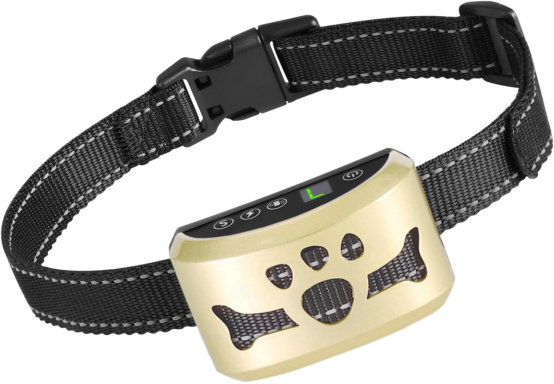
For many dog owners, excessive barking can be a challenge, making the right training tool crucial. Among the many solutions, a bark collar is a common choice. However, with various types of bark collars on the market , choosing the right one for your dog can be confusing. This article compares two of the most common types: vibration collars and shock collars. By analyzing their working principles, applicable breeds, and effects, we can help you make a informed choice.

Learn about different types of Bark Collar

Before delving into comparisons, we first need to understand the basic working principle of bark collars . These devices are designed to suppress unwanted barking by providing stimulation when a dog barks. Common types of bark collars on the market include vibrating collars and shock collars.

Although both types of collars are designed to interrupt a dog’s barking behavior through stimulation, they use different methods of stimulation. We will now explain in detail how each type works and in which situations it is suitable.

Vibration Bark Collar: How a Vibrating Collar Works

A vibration bark collar is a relatively gentle training tool. It works by detecting vibrations in the dog’s neck when it barks, activating the collar to send a vibration signal to the dog. This vibration is usually very slight, similar to the vibration you feel when you touch an electronic device.

The biggest advantage of vibrating collars is their relative gentleness, with minimal impact on a dog’s physical and psychological well-being. Vibration stimulation does not cause discomfort or pain like electric shock collars, making them suitable for dogs that are more sensitive to stimulation, especially small breeds or anxious breeds.

Shock Bark Collar: How the Electric Shock Collar Works

Unlike vibration collars, shock collars use static electricity to correct a dog’s barking behavior. When the dog barks, the collar generates a slight static shock via a battery. The intensity of the shock is adjustable, typically starting at a lower intensity and gradually increasing.

Shock collars are designed to alter a dog’s behavior by providing a noticeable discomfort, causing the dog to associate barking with a negative response. While this stimulation is more intense than vibration, many modern shock collars come with different intensity settings and safety features to prevent overstimulation.

Dog wearing a vibration bark collar during training

Vibration vs Shock Collar: Comparison of Applicable Dog Breeds

Different types of bark collars are suitable for different dog breeds and behavioral patterns. Choosing the right type of collar can not only improve training effectiveness but also ensure the dog’s safety and comfort.

Vibrating collar suitable dog breeds

A vibration bark collar is a gentler option, suitable for dogs sensitive to electric shocks or with a more docile temperament. Below are some breeds for which vibration collars are suitable:

  • Small dogs : Small dogs have more delicate necks and react more strongly to electric shocks, so a vibrating collar is a better choice. It can effectively help small dogs control barking without causing them excessive physical harm.
  • Anxious breeds : Some breeds are naturally more anxious and prone to barking in response to external stimuli. For these breeds, the gentle stimulation provided by a vibrating collar can help them calm down while preventing excessive fear or anxiety caused by the electric shock.
  • dogs in the early stages of training: A vibrating collar can be used as a tool to gradually guide dogs and help them understand what behaviors are expected without causing them to lose confidence due to excessive stimulation.

Suitable dog breeds for electric shock collars

Shock collars are suitable for dogs that bark excessively or exhibit stubborn behavior. Their adjustable intensity makes them suitable for breeds that require stronger stimulation to change behavior. The following are some breeds suitable for using shock collars:

  1. Large dogs : Large dogs typically have strong necks and are less sensitive to shocks. Therefore, when using an electric shock collar, the intensity of the shock can be adjusted according to their size and tolerance. The shock collar provides sufficient stimulation to help large dogs concentrate during training.
  2. Stubborn breeds : Some breeds are naturally stubborn and require strong stimulation to break their behavioral patterns. For example, some sheepdogs or hunting dogs may ignore gentle vibrations, and the stimulation from an electric shock collar can help them adjust their behavior more quickly.
  3. For dogs with severe barking problems : If a dog’s barking problem has become uncontrollable, an electric shock collar can provide more significant results. Especially in cases requiring long-term training, the electric shock collar can provide clear feedback to the dog, helping them adapt to training requirements more quickly.
Dog wearing a vibration bark collar during training

Vibration Bark Collar vs Shock Collar: Effect Comparison

When choosing a bark collar , effectiveness is one of the most important factors to consider. Vibrating collars and shock collars each have different advantages and applicable scenarios, so their effectiveness will vary depending on the dog’s behavioral characteristics and training goals.

The effect of the vibrating collar

Vibrating collars primarily interrupt barking behavior in dogs through gentle vibrations. For highly sensitive or easily startled dogs, vibrating collars provide sufficient distraction without causing excessive anxiety or fear. Their effect is generally mild and suitable for use when the dog’s barking is mild.

For dogs in the early stages of training, a vibrating collar can help them gradually understand which behaviors are prohibited without causing them excessive fear or anxiety. The effects of the vibrating collar become increasingly apparent, especially with consistent training and use, as the dog slowly develops positive behavioral patterns.

The effect of the electric shock collar

Electric shock collars typically work quickly, especially on dogs with severe or persistent barking problems. By adjusting the shock intensity, owners can ensure their dog stops barking with appropriate stimulation. The collar provides immediate feedback, which is particularly effective for some dogs with stubborn behaviors.

However, the effectiveness of shock collars also depends on proper usage. Improper use or excessive stimulation can cause fear or discomfort in dogs, affecting their mental health. Therefore, shock collars should be used with caution, and the dog’s reaction should be constantly monitored during use.

Large dog responding to adjustable shock collar stimulation

Summarize

Choosing the right bark collar type depends on the dog’s personality, training needs, and behavioral characteristics. Vibration bark collars are suitable for dogs with a gentler or more sensitive temperament, while shock collars are suitable for dogs with severe or persistent barking problems. Regardless of the type chosen, consistency in use and constant monitoring of the dog’s reactions are essential to ensure safety and effectiveness.

If you’re considering using a bark collar to help control your dog’s barking, understanding the pros and cons of each type will help you make a more suitable choice. Learn more about the different types of bark collars , and get detailed product descriptions and usage guides.

Leave a Reply

Your email address will not be published. Required fields are marked *