In the early hours of the morning, that sharp, persistent barking pierced the walls once more. You could almost feel the anger of your neighbor as they tossed and turned in bed, and the complaint letter was about to be slipped under the door.

In such a desperate moment, ordering a bark collar is almost an instinctive self-preservation reaction.

But many dog owners, after buying them, simply install the batteries, fasten the collar around their dog’s neck, and then hope for a miracle. This is why 60% of anti-bark collars end up gathering dust in a drawer.

Marketing advertisements always imply that it’s like a “mute button” on a TV remote.

That’s completely wrong.

If you only use it as a punishment tool, you might end up with a more anxious or even aggressive dog.

Today, we’re going to tear away that “simple and brutal” packaging and explore how to integrate the bark collar as a sophisticated component into a complete bark collar training system encompassing “daily management—behavior guidance—reward mechanisms.”

This is not just about quiet; it’s about communication.

Black French Bulldog relaxing indoors. A humane bark collar can assist with training.

Chapter 1: Debunking the “Mute Button” Illusion—It’s Actually a “Gentle Tap on the Shoulder”

Let’s talk about that secret that no one in the industry is willing to reveal.

Many cheap bark collar manufacturers are focusing on “vibration levels” or “shock intensity,” as if greater force equates to better results. This is purely a ploy to fleece anxious, impatient customers.

The core technology of truly high-end devices always lies in “recognition algorithms” and “intervention timing.”

If you’ve ever held a high-quality receiver in your hand, you’ll notice it has a certain solid weight. This weight isn’t cumbersome; it’s there to ensure that the two metal probes can fit stably against the skin on either side of the dog’s Adam’s apple, sensing the microsecond-level physical feedback of the vocal cord vibration.

In this complete training system, the role of the bark collar is not that of a “prison guard,” but rather a “reminder.”

Imagine you’re talking non-stop when someone gently taps you on the shoulder. You stop and turn to look at them.

It’s this very second.

The anti-bark collar creates this precious “one-second gap.” It cuts off the neural circuits that would trigger a dog’s frantic barking.

The mistake most owners make is thinking this one second is the end. No, it’s just the beginning. This one second is your optimal window of opportunity to intervene, your chance to take the lead and establish authority.

If you don’t tell it “what to do” in this second, it will just continue to vent its anxiety in another way the next second.

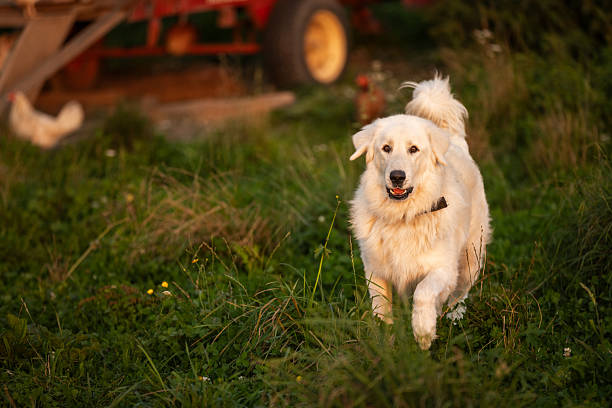
Great Pyrenees running in a field. A gentle bark collar helps manage barking.

Chapter Two: The Logical Loop from “Don’t Shout” to “Do It This Way”

Many training failures stem from a lack of a holistic dog training tool mindset.

We put the collar on the dog but forgot to teach it how to “turn off” the stimulation from the collar. It’s like giving someone a complicated math problem but not teaching them the formula, only hitting their hand when they get it wrong.

The correct logical flow should be like this:

  1. Trigger: The doorbell rang, and the dog started barking.
  2. Interruption: The bark collar emits a warning sound or a microcurrent, causing the dog to shut up unexpectedly.
  3. Redirect: (This is a crucial step that most people overlook.) The moment it closes its mouth, immediately give a command, such as “go back to the cushion” or “sit down.”
  4. Reward: Immediately reward it with a high-value reward when it executes your alternative command.

Here, the collar is only responsible for saying “No,” and you are responsible for saying “Yes.”

Through this repeated practice, the dog will establish a new neural connection: the doorbell rings -> I shut up and go back to the mat -> I get a reward.

Gradually, you’ll find that even without a collar, your dog will automatically run back to its mat when the doorbell rings. This is our ultimate goal: the disappearance of tools.

However, in this process, you need to choose a device that can precisely adjust the sensitivity without hurting the dog’s self-esteem.

Check out our in-depth review of the “progressive” smart Bark Collar series.

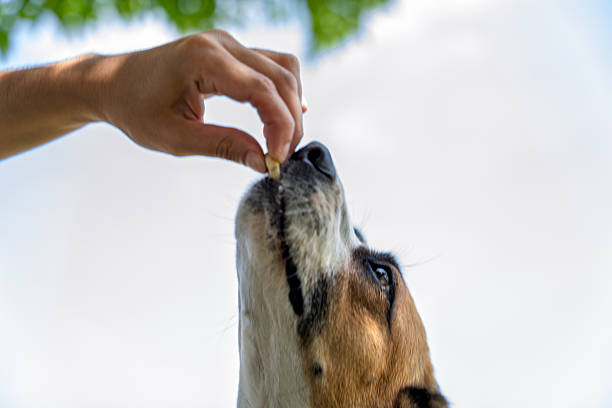
Hand feeding a dog a treat. Combine positive training with a bark collar.

Chapter 3: Reward Mechanisms—Filling Behavioral Vacuums

If you remove a bad habit, you must replace it with a good one. Otherwise, it creates a behavioral vacuum that will quickly be filled with new bad habits (such as destroying things or chewing on feet).

This is why using a bark collar alone is unsustainable.

I once saw a Labrador that, because it wore a cheap bark suppressor, did stop barking, but it started frantically licking its front legs, leading to a severe skin infection. This was because it had no outlet for its energy.

When establishing this bark collar training system, the reward mechanism must account for 50% of the effort.

When the dog stops barking because of the collar’s reminder, even if it’s only quiet for three seconds, you should praise it as if it had just saved the world.

You need to make it understand that silence is not a form of suppression but a high-class job that can earn you beef jerky and petting from your owner.

This positive feedback loop can greatly offset the stress caused by the collar. It makes the dog feel that the little black box hanging around its neck is actually a hint for completing a game. As long as it follows the hints, good things will happen.


FAQ (Frequently Asked Questions)

Will a bark collar hurt my dog?

It depends on the product you choose and how you use it. Modern, high-quality bark collars primarily rely on audible warnings and vibration patterns.

Static correction is usually a last resort, and its intensity is similar to static electricity (like the feeling of touching a doorknob in winter), intended to “startle” rather than “cause pain.” It’s key to avoid using cheap products that lack a safety chip and continuously discharge.

Should I make my dog wear an anti-bark collar all day?

Absolutely not. This is not only because prolonged pressure from the metal probe on the skin can lead to pressure necrosis, but also because it can cause desensitization.

It is recommended to:

  • Wear it for no more than 8-10 hours per day.
  • Adjust its position every 1-2 hours.

This is a training tool, not a decoration.

Can bark collars be used for dogs that are particularly timid?

Using a bark collar on an extremely sensitive or fear-based dog may exacerbate its fear.

In such cases, it is recommended to start with a pure vibration mode or lemon spray product, combined with extensive desensitization training, or consult a professional dog trainer to develop a gentler holistic dog training tools program.

How do I determine if the tightness of the collar is appropriate?

This is a matter of physical sensation. You should be able to barely insert one finger (and only one) between the probe and the skin.

If it’s too loose, the probe won’t make contact with the skin, the current won’t form a circuit, the collar will malfunction, or the skin will become red and swollen due to friction.

If it’s too tight, it will make the dog feel suffocated and uncomfortable.


Conclusion

Training a dog is actually training yourself.

The moment you decide to take up the bark collar, remember that you’re not looking for a magic switch that will solve everything once and for all.

You’re bringing in a strict but fair teaching assistant.

Don’t let this teaching assistant fight alone.

The real change happens in the eye contact after the collar vibrates, in the snack you promptly offer, and in your patient guidance day after day.

When one day you realize that the bark collar has been sitting in the drawer for a month without being taken out, and your home remains quiet and peaceful, congratulations, your training system has been a complete success.

Because the best control often stems from understanding, rather than suppression.

Leave a Reply

Your email address will not be published. Required fields are marked *