Understanding the triggers of dog barking and how bark collars can intervene at the right time is crucial for resolving barking issues. Dog barking has specific triggering mechanisms, similar to human reaction patterns, often a series of behaviors triggered by external stimuli or internal emotions. In this article, we will analyze the dog barking trigger chain from a psychological and behavioral perspective and explore how bark collars can precisely intervene in this behavior.

Barking Trigger Path: Analyzing the Root Causes of Dog Barking

To effectively manage a dog’s barking behavior, it’s essential to first understand what triggers it. Dog barking triggers are the root causes of barking in dogs and can generally be categorized into several main factors: environmental stimuli, emotional changes, and learned behaviors.

Environment trigger

Environmental factors are one of the most common triggers for barking. For example, dogs will often start barking when the doorbell rings, when they see another dog, or when a stranger or animal enters their territory. This barking is often an alert or protective response and is a dog’s natural instinct.

Emotional trigger

A dog’s emotional changes are also a significant cause of barking. For example, a dog with separation anxiety may bark incessantly when its owner leaves; while an overly excited dog may bark frequently due to excitement, even without any obvious external stimulus.

Learning behavior

In many cases, barking becomes a learned behavior, especially when dogs use barking to gain attention. If a dog receives treats, petting, or other forms of attention after each bark, it may continue the behavior in hopes of receiving the same reward again. This positive reinforcement cycle makes the barking behavior more ingrained.

Understanding these triggers helps identify the most suitable interventions to reduce excessive barking. In this case, a bark collar is an effective tool for intervening in barking behavior by breaking the chain of barking by providing appropriate feedback at the moment the dog barks.

Dog reacting to environmental triggers before barking

Bark Collar intervene in barking behavior?

Having understood the trigger chain of dog barking, let’s explore how the bark collar can intervene precisely within this chain. The core function of the bark collar is to immediately interrupt this behavioral chain when the dog begins to bark, helping the dog adjust its behavior through immediate feedback.

Mechanisms for attracting attention: recognizing the triggers of barking

Most bark collars are equipped with advanced detection systems that can sense vibrations in a dog’s throat or the sound of barking. Once a bark is detected, the bark collar activates stimulation mechanisms, such as vibrations, sounds, or mild static electricity, depending on the type of bark collar .

This detection system requires precise timing, responding at the very moment of barking to effectively interrupt the dog’s behavior. The immediacy of the feedback is crucial for a dog’s learning; it helps the dog quickly associate discomfort with barking, thereby reducing or eliminating the behavior.

Gradual adjustment and sensitivity

Most bark collars have a progressive stimulation regulation mechanism, which adjusts the intensity of the stimulus according to the dog’s adaptation. Initially, it usually starts with the slightest vibration or sound, and the intensity is gradually increased only if the dog’s barking behavior does not improve. In this way, the dog can gradually adapt and correct its behavior without causing excessive discomfort.

Automated intervention: Preventing overstimulation

Many bark collars are equipped with intelligent systems that can recognize continuous barking and avoid repeatedly activating the stimulus in a short period of time. This mechanism helps prevent dogs from being bothered by excessive feedback and allows them to remain calm for longer periods.

Bark collar detecting a dog’s throat vibration

Behavioral analysis: Why do some dogs bark more?

Not all dog barking has the same cause, and understanding a dog’s behavioral characteristics is crucial for choosing the appropriate intervention method. For example, some dogs bark due to territorial instincts, while others may bark due to boredom or anxiety. Different behaviors have different intervention logics behind them.

Territorial barking

Many dogs bark due to an instinctive territorial instinct, especially when they see or hear strangers or other animals approaching. This barking is usually a warning or a way to protect their territory. For these dogs, a bark collar can intervene as soon as the barking behavior begins, helping them gradually reduce meaningless warning barking.

Anxiety-induced barking

Separation anxiety is a common cause of excessive barking in dogs, especially when they feel lonely or insecure. The use of a bark collar for this type of behavior should be approached with caution. Generally, a bark collar can help reduce anxiety-induced barking when combined with training and gradual adaptation, but over-reliance may not completely resolve the anxiety issue.

Excitement barking

Some dogs bark excessively when overly excited, especially when encountering things or people they like. While this barking behavior may seem harmless, excessive excited barking can disturb those around them. Using a bark collar can effectively interrupt this type of excited barking and help your dog learn to remain calm when excited.

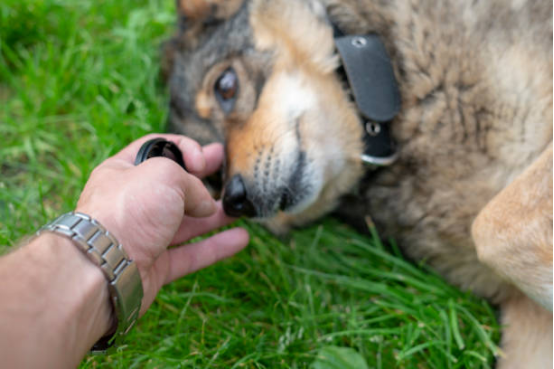
Dog wearing training collar during behavior correction

Key Advantages of Bark Collar

Compared to other training tools, the bark collar has some unique advantages:

  1. Precise timing of intervention : Bark collars can provide feedback the instant a dog begins to bark. This immediate intervention helps the dog better understand the relationship between its behavior and the feedback.
  2. Adjustable feedback : Many bark collars offer multiple feedback modes and sensitivity adjustment options, allowing you to customize the intervention intensity based on your dog’s breed and personality for optimal results.
  3. Non-invasive intervention : Compared to methods such as corporal punishment, the feedback provided by the bark collar is gentle and will not harm the dog, but is enough to break the cycle of bad behavior.
  4. Behavior change : Through continuous feedback, bark collars can help dogs gradually reduce unnecessary barking and develop more appropriate behavioral patterns.

Understanding barking triggers and choosing appropriate intervention methods

A dog’s barking trigger chain is a complex process involving multiple factors such as environment, emotions, and learning. As an intervention tool, the bark collar can provide precise feedback at the moment a dog barks, helping them break the vicious cycle of barking behavior. By understanding the dog’s barking trigger chain and the working mechanism of the bark collar , you can more scientifically choose appropriate intervention methods to teach your dog to stop barking at the right time.

Learn more about how to use a bark collar to manage your dog’s barking behavior, and get more professional advice and resources.

Leave a Reply

Your email address will not be published. Required fields are marked *