In our subconscious, pet supplies seem to have an infinite shelf life. That leather leash is still sturdy after five years, and the stainless steel dog bowl remains shiny and new even after two generations of dogs.

This ingrained way of thinking easily makes us overlook the fact that the bark collar hanging around a dog’s neck is essentially a sophisticated miniature computer.

Imagine using a five-year-old smartphone for urgent work. Most likely not, because it’s unresponsive and the battery is constantly draining. Similarly, an aging bark collar can also become malfunctioning due to the deterioration of its internal components.

The most dangerous thing isn’t that the equipment completely breaks down (in which case you’ll just replace it with a new one), but rather that it enters an “unstable, sub-healthy state.” It might work intermittently, or delay triggering at crucial moments.

This inconsistency is a major no-no in behavior training; it will confuse the dog and even destroy the conditioned reflexes you’ve worked so hard to establish.

Hunter kneeling with his dog wearing a GPS bark collar in a forest.

Symptom 1: “False health” of the battery and sudden voltage drop

Many users ask me: How long do shock collars last? Typically, the physical lifespan of a lithium-ion battery is 2-3 years (approximately 300-500 cycles).

However, this doesn’t mean it won’t work after 3 years; its degradation is insidious.

Have you ever encountered this situation: the indicator light clearly shows a green “fully charged” status, but after your dog barks once and the collar issues a warning, the indicator light immediately turns red or even shuts down completely?

This is a typical case of “voltage sag.” Although an aging battery can falsely report a full voltage of 4.2V, its internal resistance is extremely high. When the vibration motor or electrostatic module starts, it requires a large current, which the aging battery cannot supply, causing the voltage to drop instantly and triggering the chip’s self-protection shutdown.

The signal needs to be changed:

  • Charging is unusually fast: it used to take 2 hours to fully charge, but now it only takes 20 minutes for the light to turn green (phantom charge).
  • Cold weather strike: In winter, fully charged equipment can run out of power in just a few minutes outdoors.
  • Flickering freeze: The device will automatically restart when static electricity is triggered.

If these signs appear, do not attempt to search for “replace bark collar battery”.

Modern bark collar batteries typically use an integrated, ultrasonically welded seal to achieve an IP67 waterproof rating. Forcibly disassembling and replacing the battery can not only damage the waterproof layer but also greatly increase the risk of lithium battery combustion and explosion.

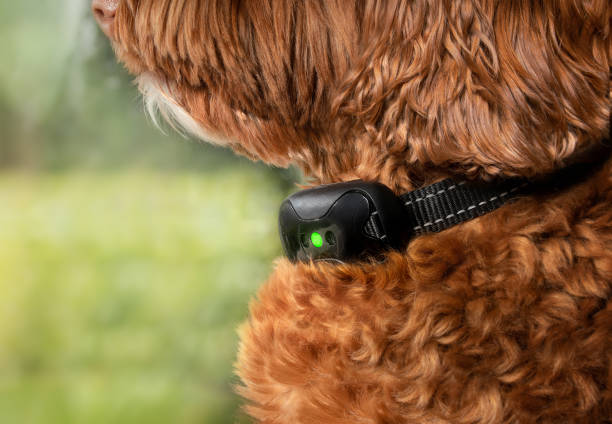
Close-up: furry dog wearing a black electronic bark collar, green light.

Symptom 2: Sensor “cognitive impairment” and triggering delay

If the battery is the heart, then the sensor is the brain. Over time, the diaphragm of the microphone (sound sensor) will attract dust and moisture, and the sensitivity of the vibration sensor will also drift.

When it comes to training, timing is everything.

The core value of a bark collar lies in providing immediate feedback within 0.5 seconds of a dog barking. If the equipment ages, this feedback time can be stretched to 2 seconds or even longer, with disastrous consequences.

Imagine your dog barks, but its collar doesn’t react. Confused, it stops and starts scratching. Just as it’s scratching, the unresponsive collar suddenly delivers an electric shock. What will the dog learn? It will think “scratching = being shocked,” instead of “barking = being shocked.”

The signal needs to be changed:

  • Slow to respond: The collar only started working after the dog barked three or four times in a row.
  • Phantom Triggers: The collar may emit warning sounds for no apparent reason, such as when the dog shakes its head, eats, or is lying quietly. This indicates that the sensor’s background noise has become out of control.
  • Intensity imbalance: At the same speed, the dog used to react, but now it is completely unresponsive (excluding the dog’s tolerance, it may be due to the aging of the step-up transformer causing a decrease in output power).
Energetic black dog barking and jumping in snow, wearing a red bark collar.

Symptom 3: The collapse of physical defenses – the invisible liquid killer

Bark collars’ environment is harsh: mud, saliva, rain, and scratches from bushes.

Even the most durable industrial plastics will develop microcracks that are difficult to see with the naked eye after a few years of exposure to sun and rain (UV aging) and alternating hot and cold temperatures.

The most dangerous hidden danger lies at the root of the contacts (prongs). Every time you tighten or change the length of the probe, you cause tiny wear to the threaded interface. Over time, this becomes a “Trojan horse” for water molecules to invade.

Once moisture seeps into the motherboard and mixes with copper ions on the circuit board, it forms a green corrosive substance. This can not only cause short circuits, but in severe cases, it can even cause the device to continuously discharge when it shouldn’t be working, causing physical harm to dogs.

The signal needs to be changed:

  • Fogging: Water vapor condenses inside the charging port or indicator light window.
  • Rust: Dark rust spots or pits that cannot be wiped off appear on the surface of metal contact points. The rough surface can chafe a dog’s skin like sandpaper.
  • Casing cracks: Especially fine cracks appearing around screw holes or at casing seams.

A responsible farewell

Every electronic product has its life cycle. When your bark collar starts to show signs of wear, don’t hesitate to give it a dignified retirement.

This isn’t about chasing the latest model for vanity, but about upholding our promise to the dogs:

Every feedback we provide must be accurate, timely, and safe.

Training with a malfunctioning device is like trying to measure the world with a ruler that’s inaccurate; ultimately, it’s your trust that will be damaged.


FAQ

How long do shock collars last on average?

How long do bark collars typically last?

Under normal daily use (wearing it for a few hours each day), a high-quality bark collar typically lasts 3 to 5 years.

However, if used in harsh environments (such as frequent swimming or hunting) or in cold regions, the battery and seals will age faster, potentially reducing the lifespan to around 2 years.

Can I replace bark collar battery by myself?

Can I replace the batteries in my bark collar myself?

For the vast majority of modern waterproof collars, the answer is no.

To achieve an IP67/IPX7 waterproof rating, the battery is sealed within a gel or welded casing. Forcibly disassembling it will damage the waterproof structure, and it’s difficult to find dedicated battery cells with perfectly matched voltage and size on the market.

Unauthorized disassembly will not only void the warranty but may also cause the device to catch fire.

How should I dispose electronic dog collar safely?

How can I safely dispose of my old electronic necklace?

Bark collars are considered e-waste and contain lithium batteries, so they should never be thrown into a regular trash can.

Lithium batteries are highly flammable and can easily ignite in landfills, and heavy metals can pollute the soil.

Please take them to your local recycling center or battery recycling bins at major electronics retailers. Protecting the environment also protects your dog’s outdoor playground.

Leave a Reply

Your email address will not be published. Required fields are marked *