Check into a beautifully landscaped, pet-friendly hotel, and the front desk kindly gives you a map of the surrounding area. You drop off your luggage, ready to head down to the restaurant for dinner, leaving your tired dog to rest in the room.

However, before your appetizers even arrive, your phone rings—it’s the front desk.

“Sir/Madam, we apologize for bothering you, but there’s been persistent barking coming from your room, and the guest next door has already complained twice. If you can’t resolve this immediately, we may have to ask you to check out.”

At that moment, the perfect holiday fantasy shattered instantly, replaced by immense embarrassment and anxiety.

With the rise of glamping and RV travel, more and more of us are eager to take our furry friends to see the world.

For dogs, travel is not relaxation but a huge sensory stress test. The sound of footsteps in an unfamiliar hallway or the sound of branches snapping in the middle of the night at a campsite can trigger their instinctive defense mechanisms.

On the road, a reliable bark collar is more than just a training tool; it’s your social pass to maintain “travel etiquette” and your last line of defense against being expelled from camp.

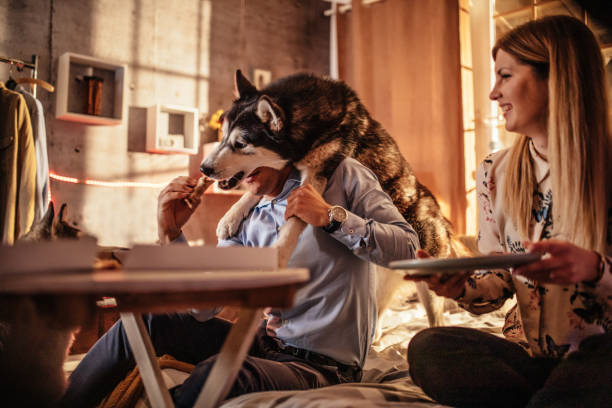
Couple relaxing in bed with their small dog, who might benefit from a quiet bark collar.

Unfamiliar walls and fragile nerves: Understanding the “stress barking” during travel.

At home, your dog is probably a quiet angel. Why does it turn into a hysterical alarm clock the moment you arrive at a hotel or RV park?

It’s not that the dog has “gone bad,” but rather that the environment has changed. In a completely new environment, a dog’s territorial instincts and fears are amplified.

The thin walls of a hotel cannot block out the sounds of cleaning carts in the corridors, the dinging of elevators, or the conversations of other guests. For a dog, these invisible noises are all potential threats.

At this point, the core logic of hotel-friendly dog training is no longer “obedience” but “emotional cutoff.”

You need a tool that can give a clear signal within 0.1 seconds that your dog is about to go into “rage mode” at the slightest disturbance: “Shh, that sound is okay, stay quiet.”

The bark collar plays a similar role here, acting as an automated “soothsayer.” It breaks the vicious cycle of [hearing noise -> escalating anxiety -> continuous barking], helping your dog establish a sense of security in unfamiliar environments.

Man feeding a husky while a woman watches; perhaps they need a humane bark collar.

Hotel Scenario: How to Use Bark Collar to Avoid “Social Death” Complaints

In high-density living environments like hotels or Airbnbs, the margin for error is virtually zero. You don’t have time for weeks of positive reinforcement training; you need immediate results.

  1. Wear upon entering the room (The “Check-in” Protocol)

    Don’t wait until your dog barks to put on the bark collar. Put it on the moment you enter the room. This is a psychological suggestion: although the location has changed, the rules (keeping quiet) remain the same.

  2. Establish a “low-sensitivity” defense line.

    In hotels, it’s recommended to lower the collar’s sensitivity by one level. Why? Because you don’t want it to be accidentally triggered by the sound of bumping into luggage. However, you need to ensure the vibration or static is strong enough to distract it. For most dogs, moderate vibration is often more effective than static because it doesn’t cause a pain-induced scream but rather confusion and attention.

  3. Exit test

    If you must leave the room briefly (although I don’t recommend leaving a dog with separation anxiety alone), do a simulation first. Turn on the TV (to create white noise), close the door, and walk around in the hallway making noise. Confirm that the travel bark collar effectively stops it from responding to your footsteps.


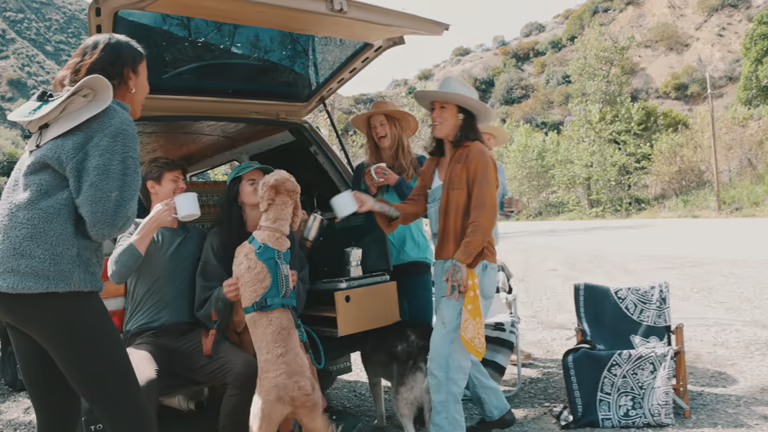
Friends and a dog enjoying a picnic outdoors, where a reliable bark collar could be useful.

Camping and RVs: Coping with Night Alarms in the Wilderness

Camping with dog barking control is a completely different game. Here, your enemy isn’t the neighboring guest, but nature itself—raccoons, squirrels, or other campers passing by at night.

In tents or RVs, RV dog barking typically occurs late at night. This explosive barking can not only wake up the entire campsite but also attract the attention of wild animals and may even get you blacklisted by the campsite (many national parks have extremely strict regulations on noise).

Wilderness Survival Rules:

  • and youAutomatic mode is superior to remote control: when camping, you might be busy setting up your tent, starting a fire, or sleeping, and can’t always hold a remote control. Choosing a precise-sensing automatic bark collar is crucial. It can be your night watchman.

  • Waterproofing is a must: Camping means dew, mud, and even streams. Your equipment must have at least an IP67 waterproof rating. Condensation inside the tent in the morning should not cause your equipment to short-circuit.

  • alert butLooking for a “progressive” feature: In the wild, we want our dogs to be alert, but not barking excessively. A collar with a “progressive stimulation” feature (first a warning sound, then vibration, and finally static electricity) is the best choice. It allows the dog to let out a low growl as a warning, but the collar only intervenes if it continues to bark.


Equipment Check: The Self-Cultivation of a Qualified Travel Bark Collar

Not all bark collars are suitable for packing in a travel bag. When you’re on the go, the last thing you want is for your device to run out of power or for you to be unable to find a charging cable.

  1. The terminator of range anxiety


    While you might find power outlets in hotels, electricity is a luxury when camping in the wild. A good travel collar must have a battery life of at least 10-15 days under normal use. Don’t choose devices that need to be charged every two days; they will become a burden on your trip.

  2. Convenience of universal interfaces

    Check the charging port. If it’s a dedicated magnetic cable, losing it will render you completely useless. A Type-C interface is a boon for travelers because you can share a cable with your phone and even use a power bank to recharge it while hiking.

  3. Portability and accidental activation lock

    When you’re stuffing your bark collar into a crowded backpack, make sure the remote has a physical lock button. Nothing’s worse than arriving at camp to find the remote’s battery dead from being accidentally turned on in your bag.


Quietness is a dog’s best “diplomatic passport.”

No matter how much we love our dogs, we must admit that in this crowded world, no one is obligated to put up with a dog that barks all night.

Using a bark collar appropriately isn’t about suppressing a dog’s natural instincts but rather about helping it adapt to the complexities of human society.

When your dog learns to remain calm in hotels and quietly observe in campgrounds, you’ll find the world opens up to it much wider. More hotels will be willing to accommodate it, and more campgrounds will welcome it.

This is not just about avoiding complaints but also about adding a peaceful and beautiful background sound to your shared memories.


FAQ

Can I leave my dog alone in the hotel room with a bark collar on?

This depends on the hotel’s policy and the dog’s anxiety level. While a bark collar can stop barking caused by noise, it may worsen the panic of a dog with severe separation anxiety. It’s recommended to conduct a short (15-minute) test outside the room first. If you must leave, use it in conjunction with background noise from the TV and blackout curtains.

What is the best type of collar for an RV dog barking?

In the confined and echoing space of a motorhome, it’s recommended to use a collar with an “anti-interference false trigger algorithm. “Microwave oven beeping, TV sounds, and even the sound of a door closing can be misinterpreted as a dog barking by a low-quality collar. Choosing a dual-sensor (sound + vocal cord vibration) device ensures that it only triggers when the dog is actually barking.

How do I introduce the bark collar before a trip?

Don’t wait until your first day at the hotel to put the collar on your dog. Start putting it on at home at least a week before your trip. Let your dog get used to the collar’s presence and understand the logic of “vibration/sound = stop barking” in this familiar, low-stress environment. This way, when you arrive at an unfamiliar travel destination, it will be able to quickly recall this learned behavior pattern.

Leave a Reply

Your email address will not be published. Required fields are marked *