For many people living alone, a bark collar is often an option seriously considered only after their daily routine has been disrupted. This isn’t because training is neglected, but because when work, commuting, alone time, and neighborly interactions intertwine, the barking problem is quickly amplified—especially during times when the owner is not home. Footsteps outside the door, echoes in the hallway, and the sound of the elevator stopping can all become triggers, turning “home” into a space that continuously emits noise.

This article does not discuss product selection, nor does it promise “instant silence.” It starts from the rhythm of living alone, breaks down the real triggers for dogs barking when they are alone, and explores how a bark collar can serve as a tool to reduce disturbances without amplifying separation anxiety, helping owners gradually establish a more controllable and reassuring daily routine.


What is barking usually responding to when the owner is not home?

A common misconception in discussions about dogs barking at home alone is that the dogs are “bored.”
However, extensive behavioral observations show that barking when alone is more of a feedback mechanism than an emotional outburst.

Common triggers include:

  • Unpredictable ambient noise (corridor, upstairs, outside the window)
  • Sudden appearance and disappearance of visual stimuli
  • The uncertainty caused by the disruption of work and rest schedules
  • “State switch” failed after owner left

For people living alone, these triggers are even harder to detect in real time. Without a second person at home to observe, adjust, or intervene, barking often occurs repeatedly without anyone knowing until a neighbor complains or the property management reminds them, at which point the problem is “heard.”

This is why many people, when searching for a quiet dog solution, first seriously consider the bark collar—it looks like a tool that can work in an “unattended” state.


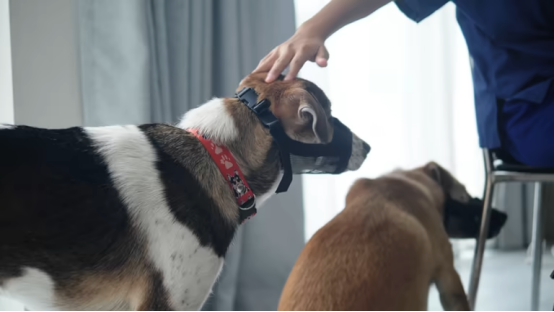
Dog alone at home reacting to hallway noise wearing Bark Collar

The true role of bark collar in a solitary living scenario

When discussing bark collars while away, a key premise is often overlooked:
It is not about “training at home for the owner,” but about providing consistent feedback when the owner is absent.

This consistency is actually more important in the context of living alone.

When their owners are not home, dogs typically only receive feedback from their environment.
A bark collar, however, adds a “stabilizing variable” to this system, ensuring that barking is no longer a completely unresponsive behavior.

However, it needs to be made clear that
This feedback does not equate to understanding, nor does it mean that the learning is complete.

Its value lies in reducing the frequency and intensity of noise output, leaving room for subsequent human guidance, rather than completing the training independently.


How does the pace of life for single people amplify the risk of separation anxiety?

Living alone doesn’t mean less companionship, but the pace of life is often more focused.

For example:

  • Long-term continuous outdoor activities
  • My get-off-work hours are not fixed.
  • The contrast between weekends and weekdays is obvious.

These rhythmic changes are not easily predictable for dogs.
When barking occurs in this context, focusing solely on whether the sound disappears can easily overlook the accumulated emotional factors.

Some users have shared similar experiences after using the bark collar:
The barking did decrease, but the dog became more clingy or unusually excited when the owner came home.

This is not because the tools “created anxiety,” but because the original unease was compressed into other time periods.

Therefore, in the context of use by people living alone, any discussion about bark collars must also address the boundaries of managing separation anxiety.


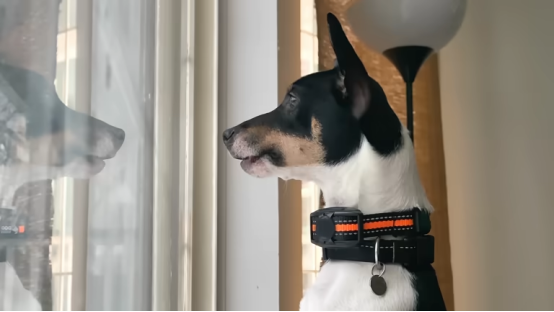
Apartment hallway triggers causing barking when owner is away

How to prevent “quiet” from becoming a new source of stress?

The real question is not whether or not to be quiet, but how to be quiet.

In practice, several principles have been repeatedly verified:

  • Barking management must be synchronized with the daily routine.
  • Tool use should be “phased,” not 24/7.
  • The quality of interaction with the user after they return home determines the stability of the tool’s effectiveness.

In other words, the effectiveness of a bark collar largely depends on what the owner does “before leaving home” and “after returning home.”

For example, establishing a clear departure ritual before leaving home and providing stable, predictable interactions after returning home can significantly reduce the probability of barking.

In such a system, collars will not become the only outlet for emotional stress.


Three common misconceptions among people living alone

The following misconceptions repeatedly appear in overviews and user experiences:

The first approach: Using a bark collar as an all-day solution
results in reduced barking, but emotional problems are postponed.

The second approach is to intervene only after a neighbor complains.
By this time, the behavior has often become entrenched, making adjustments more costly.

The third type: Ignoring changes in one’s own pace,
such as overtime, business trips, and holidays, while using the same set of feedback logic.

What these problems have in common is that
The tools came first, followed by observation.

In the context of living alone, observation is precisely the scarcest and most important resource.


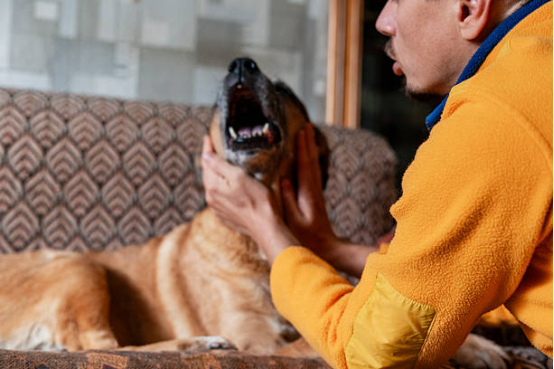
Bark Collar reducing unattended barking without owner present

How can bark collars complement human guidance?

From a systems perspective, the bark collar is more like a “noise reduction layer” than a “teaching layer.”

Its ideal location is usually

  • Reduce the risk of interference during unattended periods
  • To prevent barking from being repeatedly reinforced by oneself
  • To secure a stable window for subsequent training

True behavioral shaping still occurs during the time the owner is present.

Some trainers suggest that people living alone should focus their attention on three key areas:

  • 10 minutes before leaving home
  • 15 minutes after arriving home
  • Structured interactions on weekends or rest days

Establishing consistent rules across these nodes is far more effective than simply extending the usage time of the collar.


Beyond quietness, predictability is even more important.

For people living alone, true peace of mind does not come from “not calling at all,” but from predictability.

Knowing when it will bark, why it will bark, and whether the barking will become uncontrollable,
allows the bark collar to return to its proper place—not to replace its owner, but to support it.

Perhaps the more worthwhile question to consider is not
“Will it still bark?”

Rather:
“Does it still exist in a clear and responsive system when I’m not home?”

Once this question is answered, silence will no longer be a burden.

Leave a Reply

Your email address will not be published. Required fields are marked *