Many barking problems don’t only arise when a dog is barking.
They often occur much earlier—before the doorbell rings, before footsteps approach outside the window, or even the instant the owner decides, “It’s time to use some tools.”

The bark collar was introduced at this emotional juncture. It promised a “more worry-free” management approach: less intervention, less noise, and a return to order in life. But as tools begin to assume responsibilities that originally belonged to humans, a more subtle problem emerges— behavioral responsibility is being quietly shifted .

This article does not discuss technical principles or argue about positions. It focuses on an often overlooked aspect of training: what happens to the owner’s role in behavior shaping when the bark collar is over-reliant?


When the tools are “taken over,” responsibilities begin to blur.

In many real-world use cases, the appearance of a bark collar is often accompanied by the phrase:
“Let’s stop it from barking first.”

The statement itself is not wrong, but it is easy to slide in a dangerous direction— treating “not calling” as the end point, rather than a signal in the process .

Within the framework of dog owner training responsibility, bark management is never just about controlling the sound; it involves:

  • Trigger source identification
  • Judging a dog’s emotional state
  • Timing and manner of human reaction

When collars are viewed as “automatic solutions,” these judgments are gradually omitted.
Not because they are unimportant, but because the tool is reacting on behalf of humans .

Over time, the responsibility for one’s actions no longer clearly belongs to the individual.


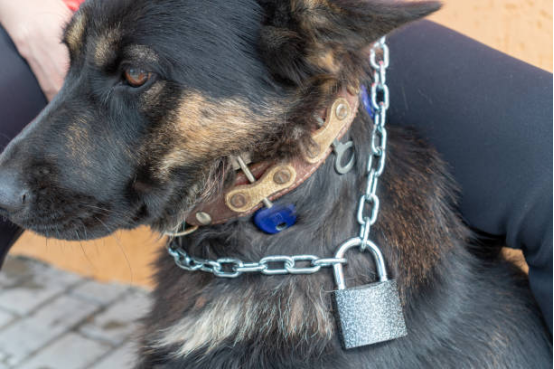
Owner observing a dog wearing a bark collar at home

Typical manifestations of overreliance on bark collar

Over-reliance doesn’t necessarily manifest as frequent use.
More commonly, it’s about cognitive outsourcing.

Some common signals include:

  • Once barking decreases, stop observing the dog’s behavior.
  • When behavior rebounds, the first reaction is “the tool has failed.”
  • The training remains stuck in the binary judgment of “to wear or not to wear”.
  • The owner’s sensitivity to triggering situations has decreased.

These are not isolated cases, but rather common experiences that have repeatedly occurred in multiple user communities.

The problem is not with the bark collar itself, but with the responsibility it has been given that exceeds its capabilities .


Behavior management is not about “who stops it,” but rather “who is responsible.”

In the context of behavioral accountability, there is a fundamental principle:
the ultimate responsibility for behavior always belongs to the managers of the environment.

To a dog, this manager is a human.

The bark collar can provide feedback after an action occurs, but it cannot:

  • Determine whether this barking is reasonable.
  • Distinguishing between vigilance and anxiety
  • Identify whether there are unmet needs.

These judgments must be made by humans.

When owners habitually let the collar “handle it first,” they are essentially relinquishing their right to make judgments.
And once this right is relinquished for an extended period, training will lose its direction.


Dog calmly responding to owner guidance while using a bark collar

Reduced barking does not mean that the responsibility has been fulfilled.

A common misconception is that results are equated with the fulfillment of responsibilities.

Reduced barking and a quieter life are easily seen as “problem solved.”
However, from a training perspective, this is merely an outcome indicator , not a process evaluation.

True responsibility is reflected in:

  • Do you understand the motivation behind the barking?
  • Have unreasonable environmental stimuli been adjusted?
  • Have the dog been taught new coping mechanisms?

If these questions remain unanswered, the responsibility has not disappeared, but has only been temporarily obscured.

This is why some trainers emphasize that
quiet is not necessarily a good sign.


Human behavior is the most easily overlooked variable in a system.

When discussing bark collars, the topic often focuses on dogs.
However, in practice, the biggest variable is often the human being.

For example:

  • Changes in work pace and reduced time spent with family
  • Emotional fluctuations, inconsistent feedback
  • The rules were loosely enforced, yet went unnoticed.

These changes directly affect the dog’s behavioral stability.
Collar does not make any adjustments to this.

When a problem arises, if your first reaction is “should I switch to a different collar?” instead of reflecting on your own behavior patterns, then overreliance on the bark collar has already occurred.


Illustration showing human vs tool responsibility in dog training

Why does “outsourcing responsibility” weaken long-term effects?

In the long run, the risks of outsourcing responsibility are not reflected in short-term behavior, but in the breakdown of learning relationships .

During the learning process, dogs continuously evaluate three sources of information:

  • Environmental feedback
  • Tool Feedback
  • Human feedback

If human feedback is consistently absent, the learning focus will shift.
Once the tools are removed, the system will become unbalanced.

This is precisely the source of confusion for many users:
“It worked before, so why does everything go wrong as soon as I stop using it?”

Because the real responsibility has never been taken back.


The appropriate place of bark collar in the responsibility system

Putting the bark collar back in its proper place doesn’t mean denying its value;
rather, it means redefining its role.

  • In a mature training system, it is more like:
  • Behavioral reminders
  • Auxiliary Feedback Source
  • Temporary stabilization tools

Instead of:

  • Decision-makers
  • trainer
  • The main body of behavior management

Tools will not erode the boundaries of responsibility when the owner maintains control over observation, judgment, and guidance.


What truly cannot be outsourced is the relationship itself.

Tools can send signals for you,
but they can’t take responsibility for your relationships.

The biggest risk associated with bark collars is not “using them incorrectly,” but rather “discontinuing to participate after prolonged use.”
When training becomes a form of passive monitoring, the responsibility for the behavior has already quietly shifted.

The ultimate goal of barking management is never silence.
Rather, it is understanding, cooperation, and the continued human presence.

The next question might not be:
“Will it still bark?”

Rather, the question is:
“When it needs to be booted, am I still in this system?”

Leave a Reply

Your email address will not be published. Required fields are marked *