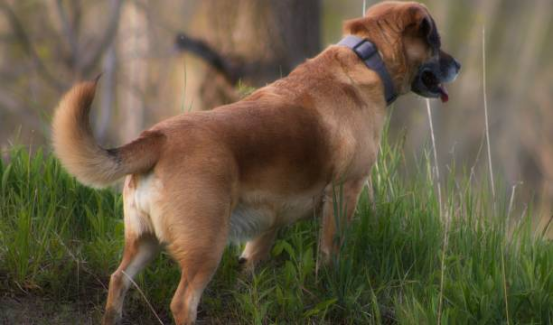
At three in the morning, the quiet street was shattered by a sharp howl. It wasn’t an alarm or the sound of wind, but your beagle spotting a stray cat. For most multi-dog households or urban pet owners, this instantaneous spike in blood pressure is nothing new. So, you start typing that word into your search engine: bark collar.

But here, we need to apply the brakes first.

Many owners, when purchasing these devices, often only focus on the “barking prevention effect,” neglecting a crucial variable: breed temperament. Applying a solution designed for the highly resilient Rottweiler to a sensitive Shetland Sheepdog often results not in calm but in psychological trauma. To achieve true harmony, we must unravel the deep connections between bark collar dog breeds, starting from genetic logic, to find the right key.


Why is a “one-size-fits-all” approach to stopping barking doomed to failure?

A dog’s barking is not some single “bad habit”; it is a function that has been reinforced through thousands of years of artificial selection.

Some vocal dog breeds are prone to barking because their ancestors were hired to “make noise.” Terriers were trained to bark continuously when they spotted prey to guide hunters; guard dogs were trained to alert themselves to any disturbance.

When you try to correct these deeply ingrained instincts with a standard bark collar, the dog will become extremely confused if the device’s feedback logic doesn’t match the breed’s pain threshold and temperament. For example, a collar with highly sensitive audio detection might be mistakenly triggered by the sound of a Golden Retriever shaking its ears, and this random punishment can make a normally docile breed become abnormally anxious.


Large German Shepherd wearing a Bark Collar for focused training

Matching strategies for different body types and personalities

When discussing the best bark collar by breed, we need to divide the audience into several dimensions: physical defense, psychological sensitivity, and the physical frequency of barking.

1. The Stubborn Type: Large dogs with high drive

Working dogs like German Shepherds (GSD) or Doberman Pinschers have extremely high levels of focus and physical endurance. For these breeds, slight vibrations or sprays from a bark collar are often simply ignored as “ambient noise.”

These breeds require a bark collar that provides clear and rapid feedback. If the feedback is too weak, they may try to “challenge” the collar, leading to an escalation of barking behavior. The logic here is not simply to increase the intensity but to improve the accuracy of the bark collar feedback, making them understand that there is an insurmountable logical loop between barking and specific sensations.

2. Sensitive type: Highly intelligent small sheepdogs

Shetland Sheepdogs, Border Collies, or Miniature Australian Shepherds are all highly perceptive of their environment. They don’t need strong stimuli; often, a gentle ultrasonic alert or a slight vibration is enough to get them thinking.

If you put an overly aggressive bark collar on these sensitive breeds, it could trigger a chain reaction, even causing them to be afraid to socialize normally outdoors. For these breeds, a “step-by-step” feature is crucial—starting with a cue tone and only escalating it when necessary.

3. The Obsessive Type: Scent Dogs and Terry Dogs

Beagles, dachshunds, or Jack Russell terriers often bark with heightened arousal. When they enter “prey mode,” they are almost in a state of near-oblivion. In this state, ordinary sensor technology is prone to failure because their throat vibration frequency differs from that of a normal bark. For these breeds, choosing a collar with dual detection (vibration + audio) is essential to ensure no missed detections.


Shetland Sheepdog responding to gentle Bark Collar vibration

Physics and Hair Challenge

Besides personality, physiological structure is also a major hurdle.

Many users have reported that wearing a bark collar on a Samoyed or Old English Sheepdog has no effect whatsoever. This is usually not because the device is broken, but because the dense double coat is blocking the sensor points.

  • Long-haired dogs require longer electrode tips or a more sensitive tactile design.
  • Short-haired/thin-skinned breeds, such as Greyhounds or Whippets, have extremely delicate skin. The material at the physical contact points must be medical-grade silicone; otherwise, prolonged wear can cause severe skin allergies or pressure marks.

Learn more about professional guidance on adjusting training modes with the bark collar.

Redefining “Quiet”: Establishing Scientific Psychological Expectations

We need to understand that no single collar should be used as a permanent silencer.

Modern behavioral experts believe that the true role of the bark collar is that of a “game-changer.” When a dog becomes trapped in compulsive barking, the device’s instantaneous feedback can interrupt its excitation circuits, giving you a few seconds to intervene and provide positive guidance.

From the perspective of vocal dog breeders, completely eliminating barking is neither realistic nor humane. A more logical approach is to filter out meaningless, disruptive barking (such as barking at falling leaves or at thin air) and retain only appropriate alarm barking. This requires owners to choose devices that allow for adjustable trigger thresholds, rather than cheap products with only two on/off settings.


Beagle using dual-sensor Bark Collar for scent-driven barking

Your dog determines your choices.

When searching for the best bark collar by breed, please be sure to let go of the herd mentality of “others are using it, and I want to buy one too.”

First observe your dog:

  • Is it making a sound to protect its territory, or is it due to separation anxiety?
  • Is its skin sensitive?
  • Is it easily disturbed by external sounds when it is excited?

Only when the technical specifications of a bark collar align with your dog’s breed’s genetic instincts will it cease to be a cold, restrictive tool and instead become a translator that helps it integrate into human society.

Looking to the future, intelligence and personalized customization will be the evolutionary direction for these tools. Perhaps one day, we will no longer need to manually adjust the settings; the collar will be able to analyze the barking spectrum of a specific dog breed and automatically match the most human-like response. Until then, as the owner, you will still be the primary responsible party and the best judge.

Do you want to know how to optimize the barking prevention effect based on the specific layout of your home?

Leave a Reply

Your email address will not be published. Required fields are marked *